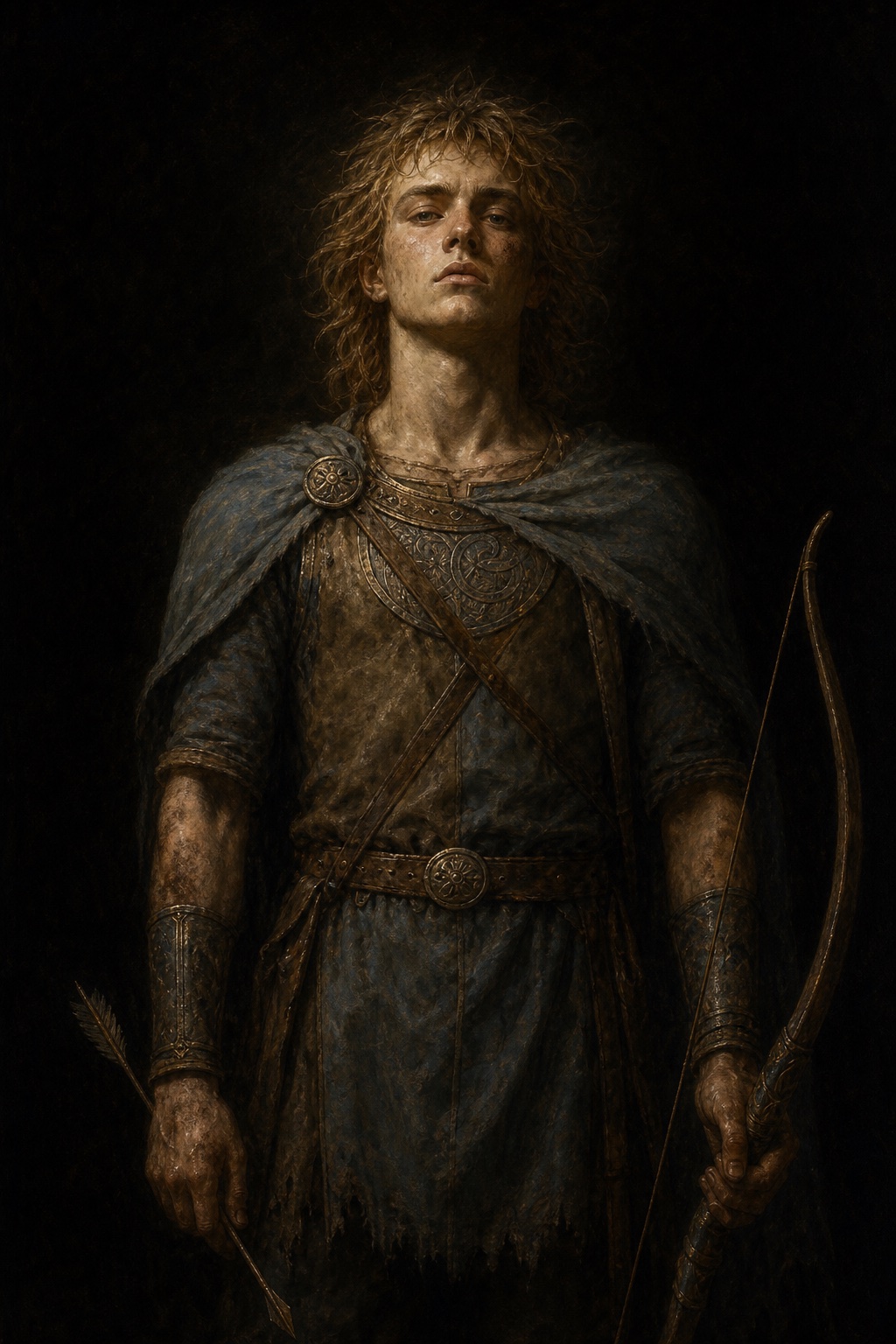
Váli exists for one purpose. After Baldr is killed by the blind Höðr with Loki’s mistletoe, Odin fathers a son on Rindr specifically to take the vengeance the other gods cannot — and the child does it immediately, at an age measured in hours.
Baldrs bróðir var of borinn snemma, sá nam Óðins sonr einnættr vega
“But the brother of Baldr was born ere long, / And one night old fought Othin’s son.” — Völuspá 33, tr. Bellows
The stanza that follows is the memorable one: he neither washed his hands nor combed his hair before he bore Baldr’s killer to the pyre. Both were things a Norse avenger was expected to forgo until the debt was paid, so the detail is not squeamishness but a formal statement that nothing was allowed to intervene — not one night, not one wash. Snorri gives him a brief entry of his own among the Æsir, calling him Áli or Váli, son of Odin and Rindr, “daring in fights, and a most fortunate marksman”, and notes that he survives Ragnarök alongside his brother Víðarr to inhabit the world that comes after.
A caution about the name: a second, quite different Váli is a son of Loki. When the gods finally bind Loki, they turn that Váli into a wolf, and he tears his brother Narfi apart; Narfi’s entrails are what Loki is bound with. The two are unrelated except by name, and the sources do not confuse them even where modern retellings do.