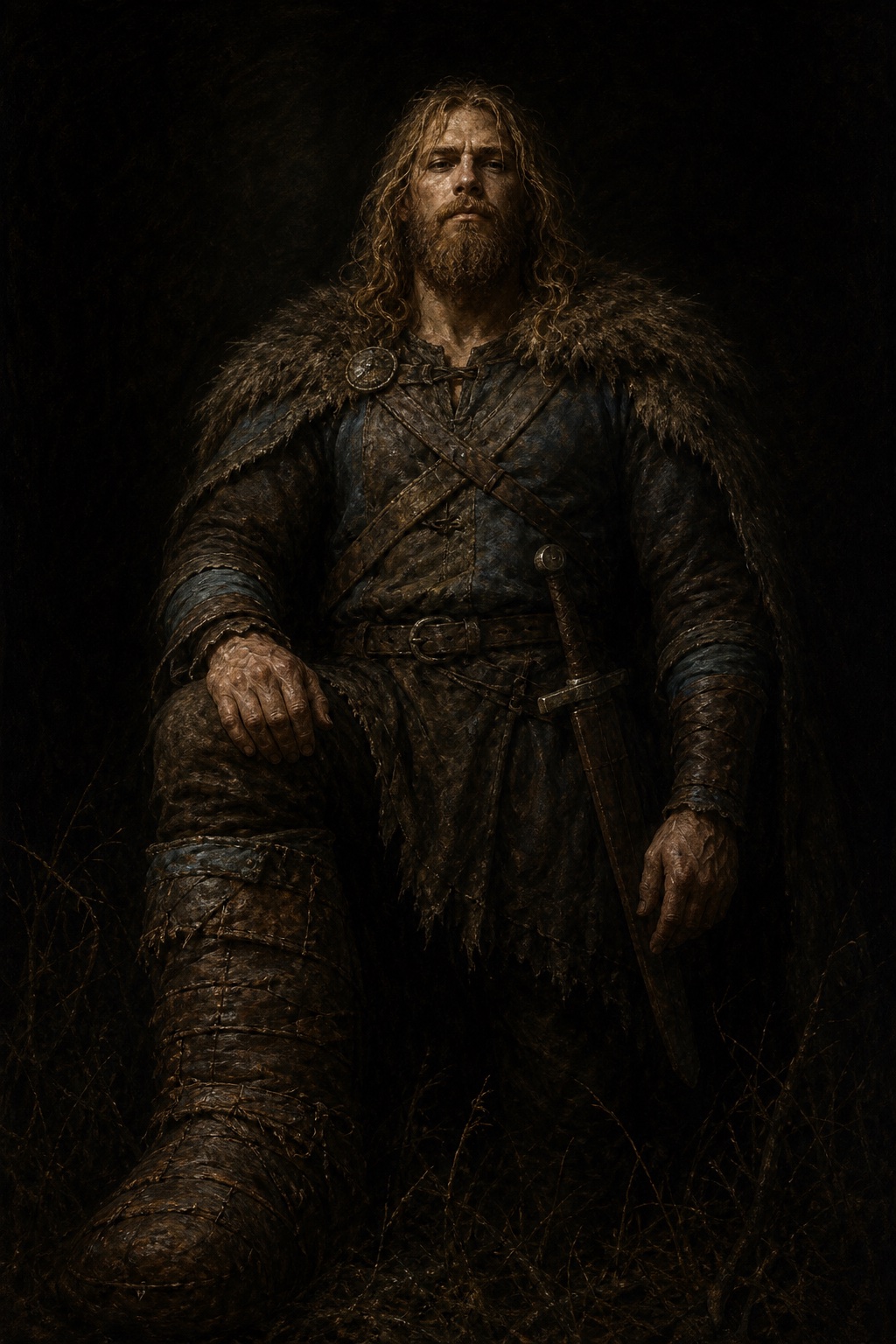
Víðarr gets four sentences from Snorri, and three of them are about strength and shoes.
Víðarr heitir einn, inn þögli áss. Hann hefir skó þjokkvan. Hann er sterkr, næst því sem Þórr. Af honum hafa goðin mikit traust í allar þrautir
“Vidarr is the name of one, the silent god. He has a thick shoe. He is nearly as strong as Thor; in him the gods have great trust in all struggles.” — Snorri Sturluson, Gylfaginning 29, tr. Brodeur
The shoe is not a detail. Snorri explains elsewhere that it has been assembled over the whole age of the world out of the scraps men cut from the toes and heels of their own shoes, and that anyone who wants to help the Æsir should throw those scraps away — a piece of household superstition folded into cosmology. The purpose of the shoe becomes clear only at Ragnarök: when Fenrir has swallowed Odin, Víðarr steps forward, sets that foot on the wolf’s lower jaw, takes the upper in his hand, and tears the mouth apart. Some versions have him run the sword through instead; the Völuspá stanza the Norse entries quote for Fenrir describes the thrust to the heart.
He is called the silent god because he is under no obligation to speak, and he is a god of the aftermath as much as of the battle. He lives in Víði, a land overgrown with brushwood and high grass, off to one side of everything. When the fire goes out and the earth comes up again, Víðarr is among the handful who are still standing — he and his brother Váli return to the plain where Asgard stood, together with Thor’s sons and the returning Baldr, and the next world is built by the survivors rather than by the winners.