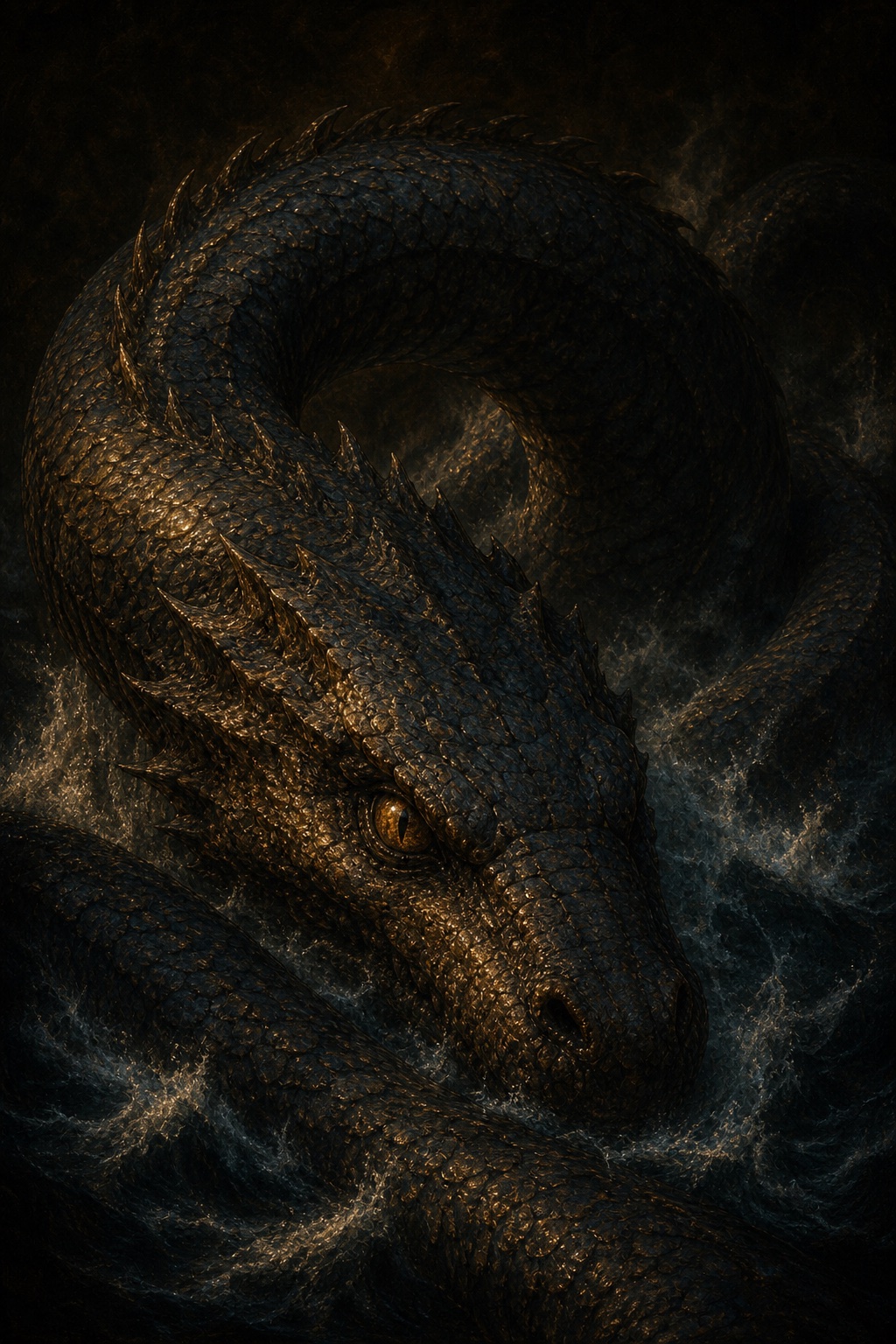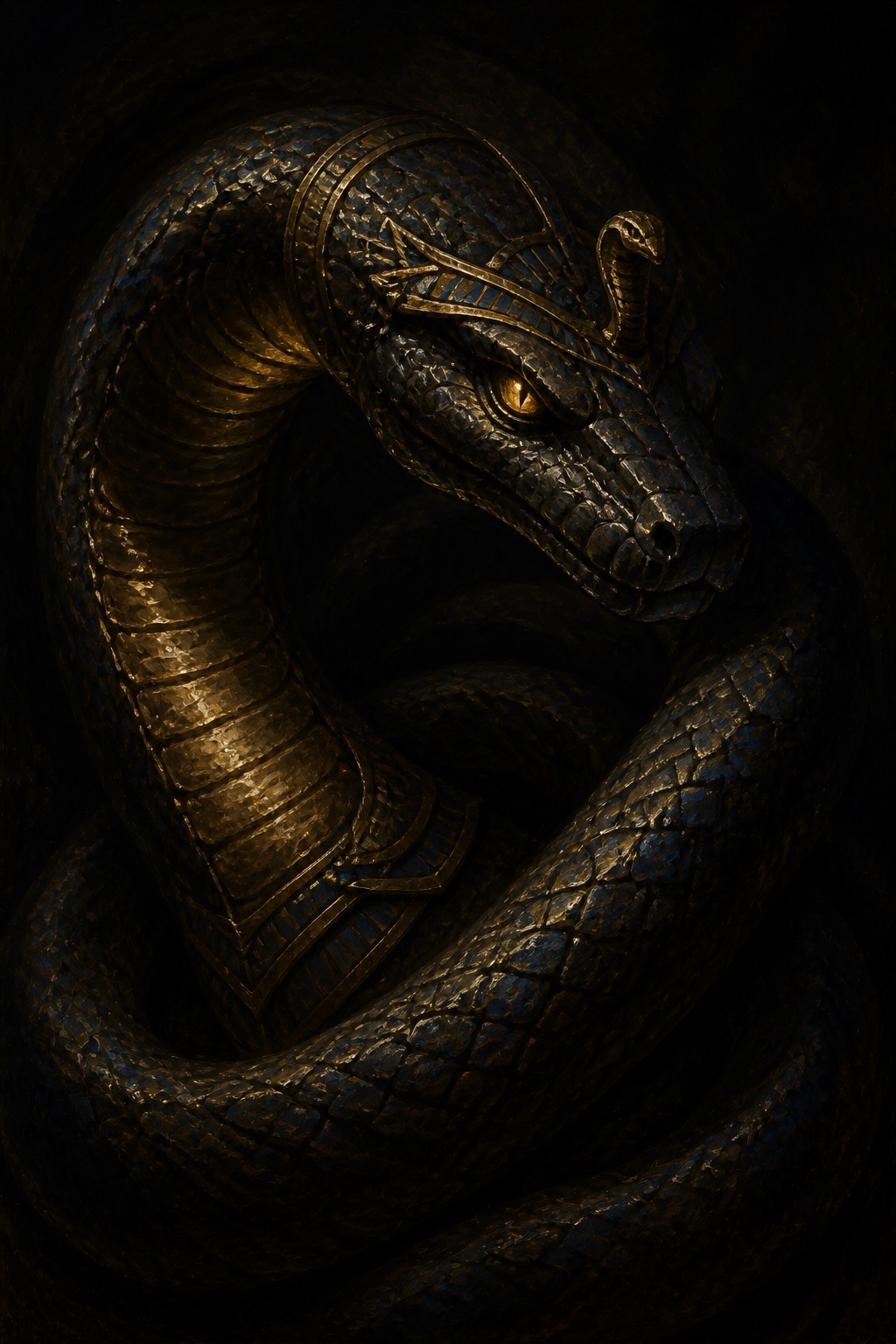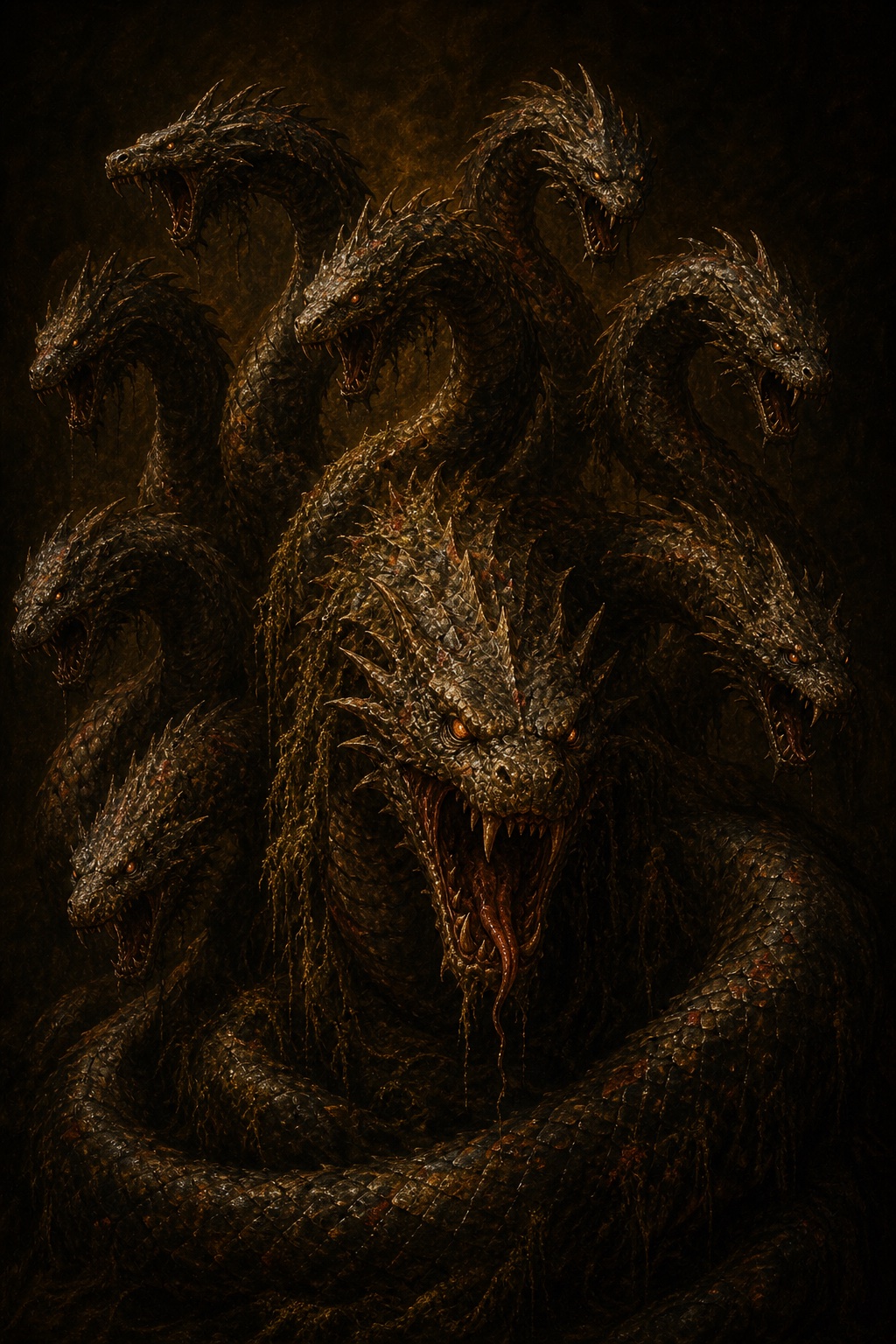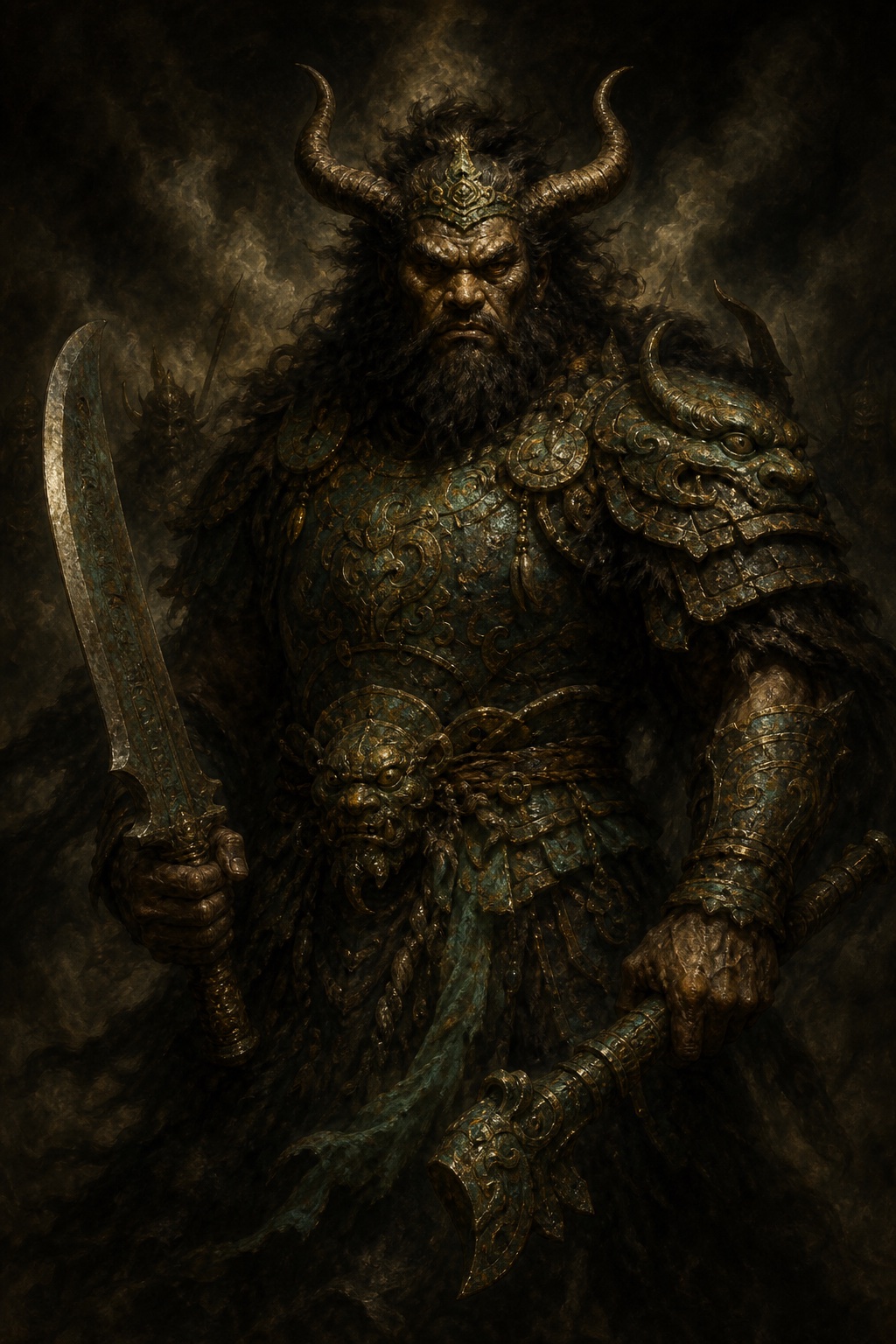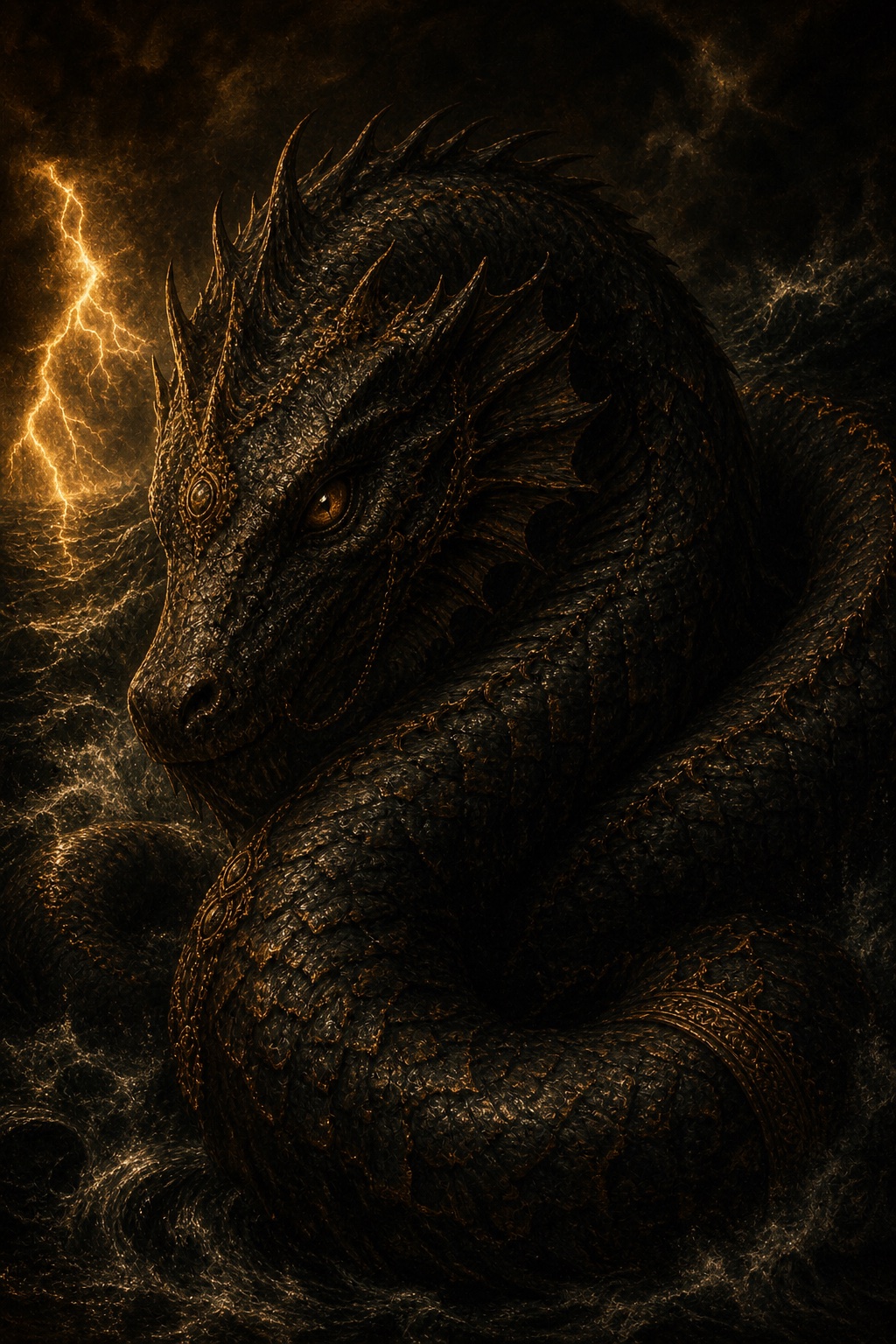
Vritra is the great serpent, or dragon (Ahi, “the Serpent”), of the Rigveda, the personification of drought and cosmic obstruction. He coils around the mountains and swallows the waters of the world, holding the rivers captive and withering the earth. His defeat by Indra, told at length in Rigveda 1.32, is the single most celebrated myth of the Vedic corpus: Indra, fortified with soma, strikes Vritra down with the vajra, and the released waters pour forth “like lowing kine” toward the ocean. The hymn names his mother as Danu, the primeval waters personified, making Vritra one of the Danavas, the brood of chaos-beings ranged against the ordered world of the devas.
Later ritual and Brahmana literature elaborates the story further, at times describing Vritra as fashioned by the craftsman-god Tvashtar to avenge the death of his own son at Indra’s hands — a shift from the Rigveda’s terser account toward the more developed demon-genealogies typical of the later Puranic period. Across every telling, though, Vritra’s role stays constant: he is the obstruction that must be broken before life-giving order can flow, the drought that precedes the rain.
अपादहस्तो अपृतन्यदिन्द्रमास्य वज्रमधि सानौ जघान । वृष्णो वध्रिः प्रतिमानं बुभूषन्पुरुत्रा वृत्रो अशयद्व्यस्तः ॥७॥
“Footless and handless still he challenged Indra, who smote him with his bolt between the shoulders. Emasculate yet claiming manly vigour, thus Vritra lay with scattered limbs dissevered.” — Rigveda 1.32.7, tr. Ralph T. H. Griffith