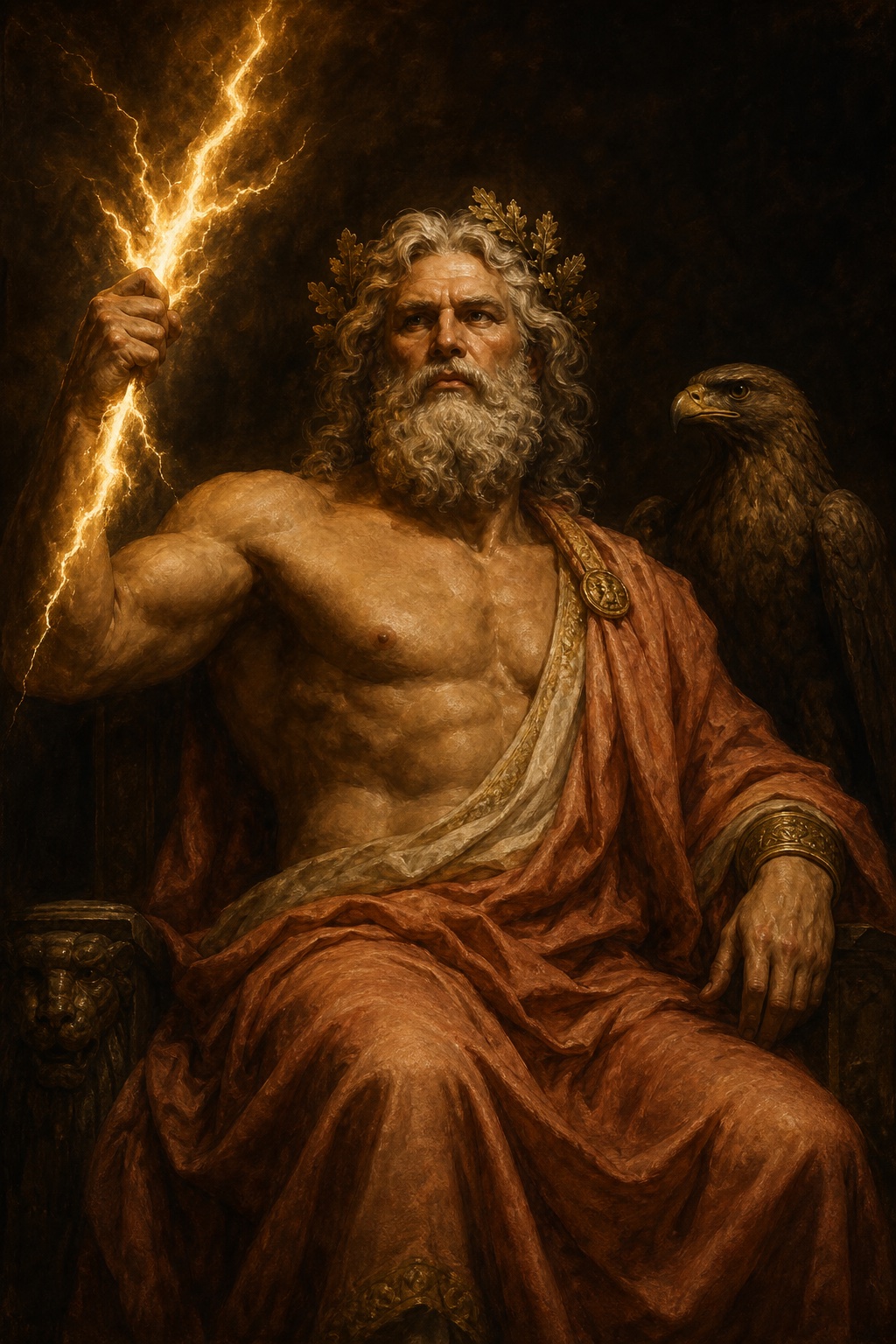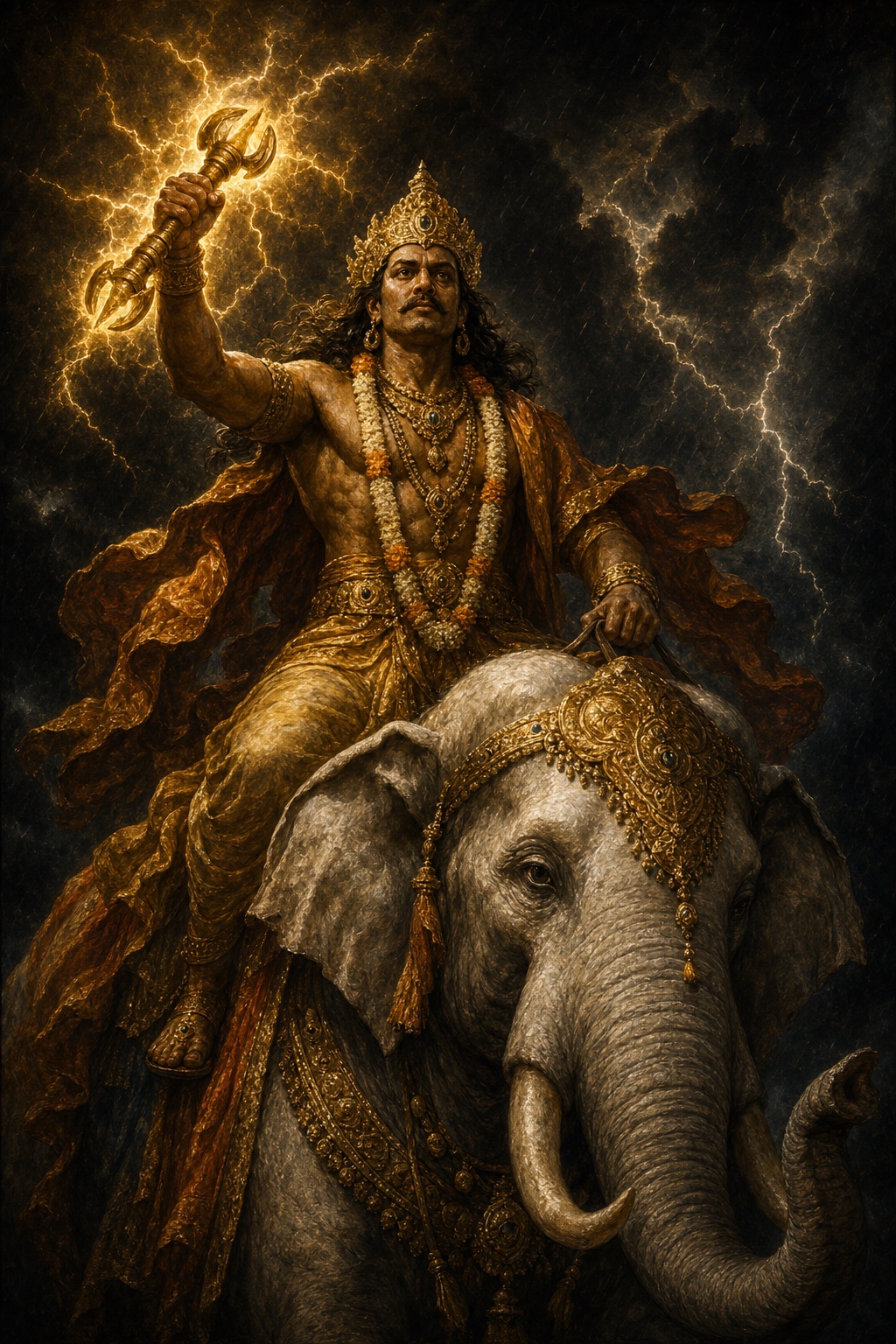
Indra is the warrior-king of the Vedic gods (devas) and the most invoked deity in the Rigveda, where more hymns are addressed to him than to any other god. He rules the sky and commands the storm, wielding the vajra, a thunderbolt fashioned for him by the divine craftsman Tvashtar, and rides into battle on the white elephant Airavata or a chariot drawn by tawny horses. His central myth is the slaying of the serpent-demon Vritra, who had swallowed the cosmic waters and pent them up in the mountains; Indra shatters him with the vajra and sets the rivers flowing again, an act the Rigveda celebrates as the founding deed of cosmic order.
In this earliest, Vedic layer of Hindu religion Indra is effectively king of the gods, tied to rain, the fertility of the soil, and victory in battle, and ancient kings were consecrated with rites invoking his sovereignty. His prominence recedes in the later Puranic tradition, where Vishnu and Shiva become the primary objects of devotion; Indra is increasingly cast as a lesser, anxious ruler of the heavens, more often guarding his throne against rival sages and demons than acting as supreme god.
इन्द्रस्य नु वीर्याणि प्र वोचं यानि चकार प्रथमानि वज्री । अहन्नहिमन्वपस्ततर्द प्र वक्षणा अभिनत्पर्वतानाम् ॥१॥
“I will declare the manly deeds of Indra, the first that he achieved, the Thunder-wielder. He slew the Dragon, then disclosed the waters, and cleft the channels of the mountain torrents.” — Rigveda 1.32.1, tr. Ralph T. H. Griffith