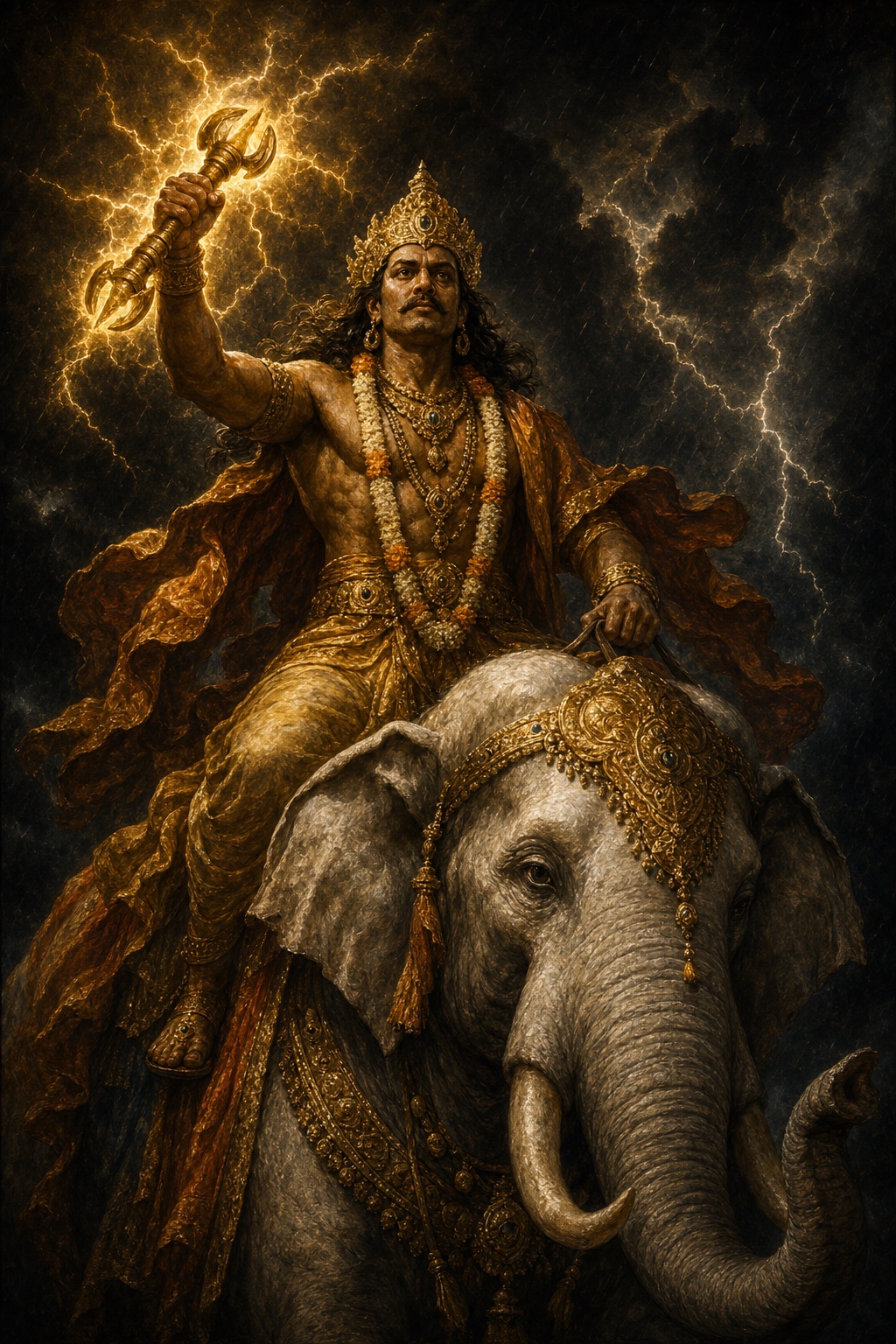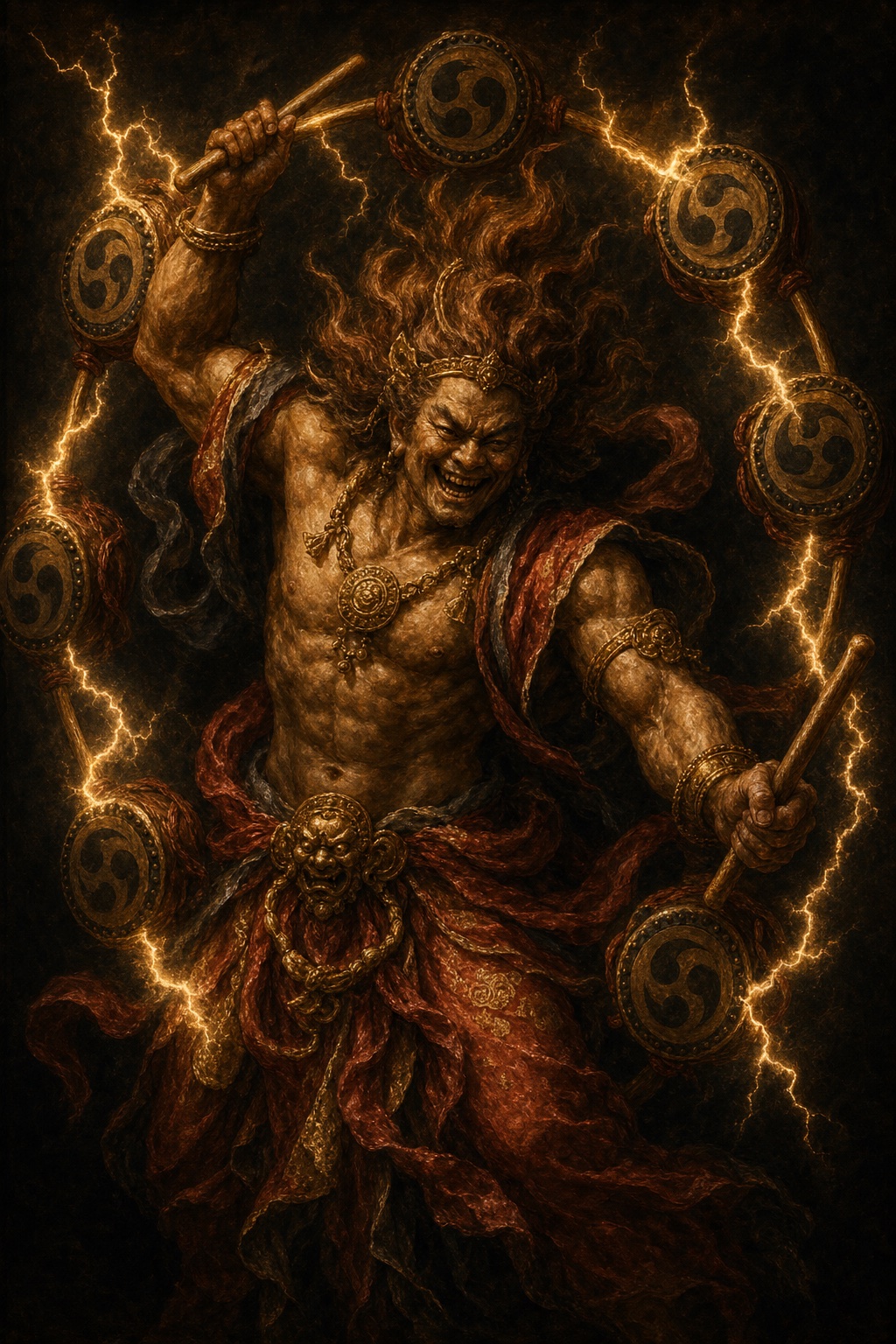
Raijin, god of thunder and lightning, is less a figure from the Kojiki or Nihon Shoki directly than a folk and Buddhist-influenced figure that grew up around the older thunder deities those chronicles do name. When Izanami dies and decays in Yomi, the Nihon Shoki describes eight thunder gods, the Yakusa no Ikazuchi, forming on different parts of her corpse:
所謂八雷者,在首曰大雷,在胸曰火雷,在腹曰土雷,在背曰稚雷,在尻曰黑雷,在手曰山雷,在足上曰野雷,在陰上曰裂雷
“Of the so-called Eight Thunders, that which was on her head was called the Great Thunder; that which was on her breast was called the Fire-Thunder; that which was on her belly was called the Earth-Thunder; that which was on her back was called the Young-Thunder; that which was on her posteriors was called the Black-Thunder; that which was on her hand was called the Mountain-Thunder; that which was on her foot was called the Moor-Thunder; and that which was on her genitals was called the Cleaving-Thunder.” — Nihon Shoki, Book I; English tr. W. G. Aston, Nihongi (1896)
Out of these scattered, unruly Ikazuchi, later Shinto and folk-Buddhist tradition consolidated a single vivid figure: a red or blue-skinned, clawed, horned oni encircled by a ring of drums, which he strikes to make thunder, and who is said in folk belief to steal navels and swallow children who neglect to cover their bellies during storms. He is regularly paired with Fujin, the wind god, as guardian figures flanking temple gates, most famously at Sensō-ji’s Kaminarimon, the “Thunder Gate,” in Asakusa, and in Tawaraya Sōtatsu’s celebrated screen painting Fūjin Raijin-zu. Farmers historically welcomed his storms as bringers of rain for the rice crop, tying even his most feared aspect to fertility and harvest.