Inari Ōkami is the kami of rice, agriculture, and worldly prosperity, and one of the most widely worshipped deities in Japan, with an estimated 32,000 shrines dedicated in Inari’s name, roughly a third of all Shinto shrines nationwide. Inari does not appear as a developed character in the Kojiki or Nihon Shoki the way Amaterasu or Susanoo do; the identification most often made is with Uka-no-Mitama-no-Kami, listed in the Kojiki’s genealogies as a child of Susanoo and Kamu-Ōichi-hime, a name meaning roughly “Spirit of Grain.”
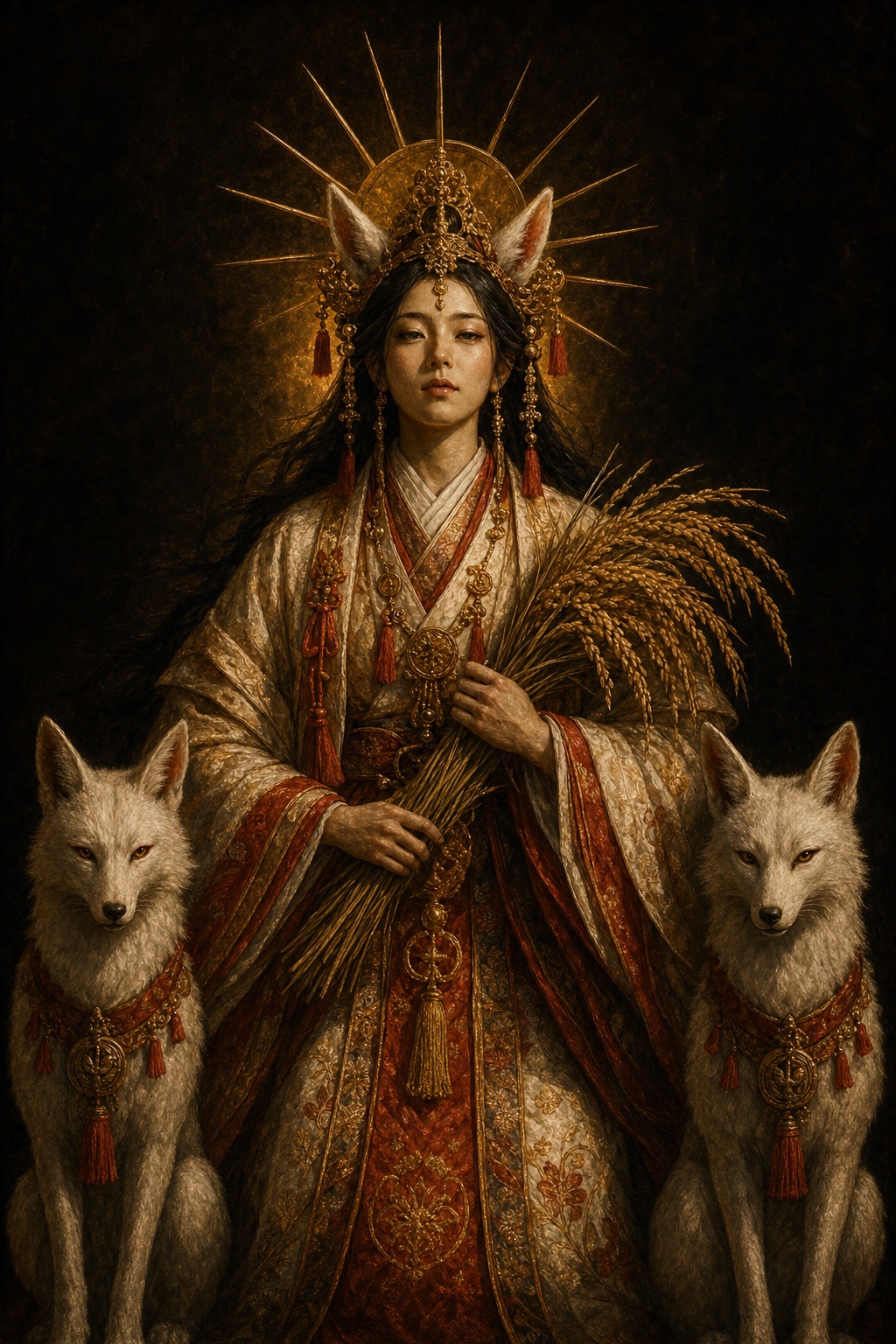
Unusually among major kami, Inari’s gender and even singular identity are unsettled. Worshippers and artistic traditions have depicted Inari as a bearded old man carrying rice, as a beautiful woman embodying abundance, and as an androgynous, bodhisattva-like figure — Inari is also venerated at Buddhist temples as Dakiniten. Rather than resolving this into one fixed form, Shinto practice generally treats Inari’s identity as fluid, and sometimes as multiple Inari kami collectively.
Inari’s shrines are instantly recognizable by dense tunnels of vermilion torii gates, often donated by grateful worshippers, and by statues of foxes, Inari’s messengers, shown holding keys, jewels, or scrolls in their mouths. The head shrine, Fushimi Inari Taisha in Kyoto, founded in 711 CE, draws enormous numbers of pilgrims, business owners, and tourists seeking prosperity to this day.