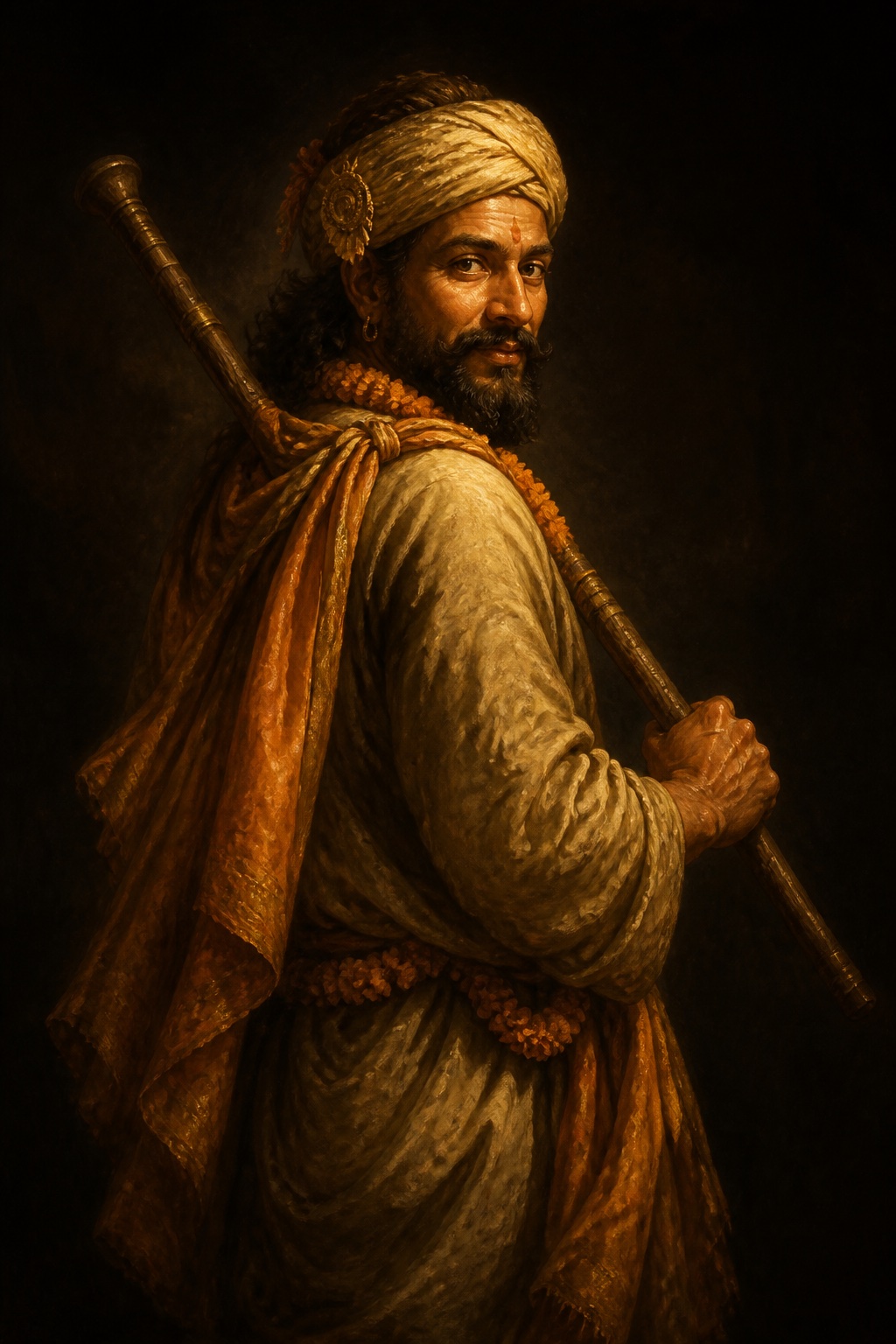
The herdsman given charge of the dead
Rigveda 10.17 opens with two verses of family catastrophe — Saranyu married off, vanished and replaced — and then turns, without transition, to a funeral. Someone has died, and the hymn’s next problem is practical: the dead man must travel a road he has never seen. The god it hands him to is a herdsman.
पूषा त्वेतश्च्यावयतु प्र विद्वाननष्टपशुर्भुवनस्य गोपाः । स त्वैतेभ्यः परि ददत्पितृभ्योऽग्निर्देवेभ्यः सुविदत्रियेभ्यः ॥३॥
“Guard of the world, whose cattle ne’er are injured, may Pusan bear thee hence, for he hath knowledge. May he consign thee to these Fathers’ keeping, and to the gracious Gods let Agni give thee.” — Rigveda 10.17.3, tr. Ralph T. H. Griffith
The credential the verse offers is अनष्टपशुः — the one whose animals are never lost. That is a herdsman’s boast, and the hymn makes it the exact qualification for this errand: a driver of cattle who has never come home a beast short can be trusted with one dead man on the longest road there is. He is to deliver the traveller to the Fathers, the way a herd is delivered whole to its pen, and Agni will hand him on to the gods.
भुवनस्य गोपाः — guard of the world
The same verse widens the herd to everything there is: Pushan is गोपाः, herdsman-guardian, of भुवनस्य, the world. The funeral hymn is not borrowing a minor cattle-god for an afternoon; it is saying that the whole living world is the flock this god watches, and the dead man does not leave that flock by dying. The verse that follows keeps him company on the road — may he “bear thee forward on the distant pathway,” in Griffith’s rendering, to the place where the pious who went before are already seated — before the hymn returns to Pushan by name.
The knower of paths
Verses five and six are the portrait: a god whose entire nature is the road, described at the moment he sets out on it ahead of the one who must walk it.
पूषेमा आशा अनु वेद सर्वाः सो अस्माँ अभयतमेन नेषत् । स्वस्तिदा आघृणिः सर्ववीरोऽप्रयुच्छन्पुर एतु प्रजानन् ॥५॥ प्रपथे पथामजनिष्ट पूषा प्रपथे दिवः प्रपथे पृथिव्याः । उभे अभि प्रियतमे सधस्थे आ च परा च चरति प्रजानन् ॥६॥
“Pusan knows all these realms: may he conduct us by ways that are most free from fear and danger. Giver of blessings, glowing, all-heroic, may he, the wise and watchful, go before us. Pusan was born to move on distant pathways, on the road far from earth and far from heaven. To both most wonted places of assembly he travels and returns with perfect knowledge.” — Rigveda 10.17.5–6, tr. Ralph T. H. Griffith
Every claim in verse five is about safe conduct. He knows आशा सर्वाः, all the regions; the way he picks is अभयतमेन, the most fearless one; he is आघृणिः, glowing — Griffith keeps the word — a guide who is his own light; and he goes पुरः, in front. The prayer is not that the road be short or the destination kind. It is that the one walking ahead knows where he is going, and this god has never not known.
Born on the far roads
Verse six gives him the strangest birthplace in the hymn: प्रपथे, on the far path itself — the distant road of heaven and the distant road of earth. Other gods have mountains, oceans, altars; Pushan is born on the way to somewhere, and his home is the stretch of road most travellers fear, the part far from either end. Between the two सधस्थे, the dwelling-places of the living and of the dead, he travels out and back, आ च परा च, and the hymn closes his portrait with the word it keeps giving him: प्रजानन्, knowing. The dead man’s road only runs one way. His guide’s runs both, which is why the guide can be trusted on it.