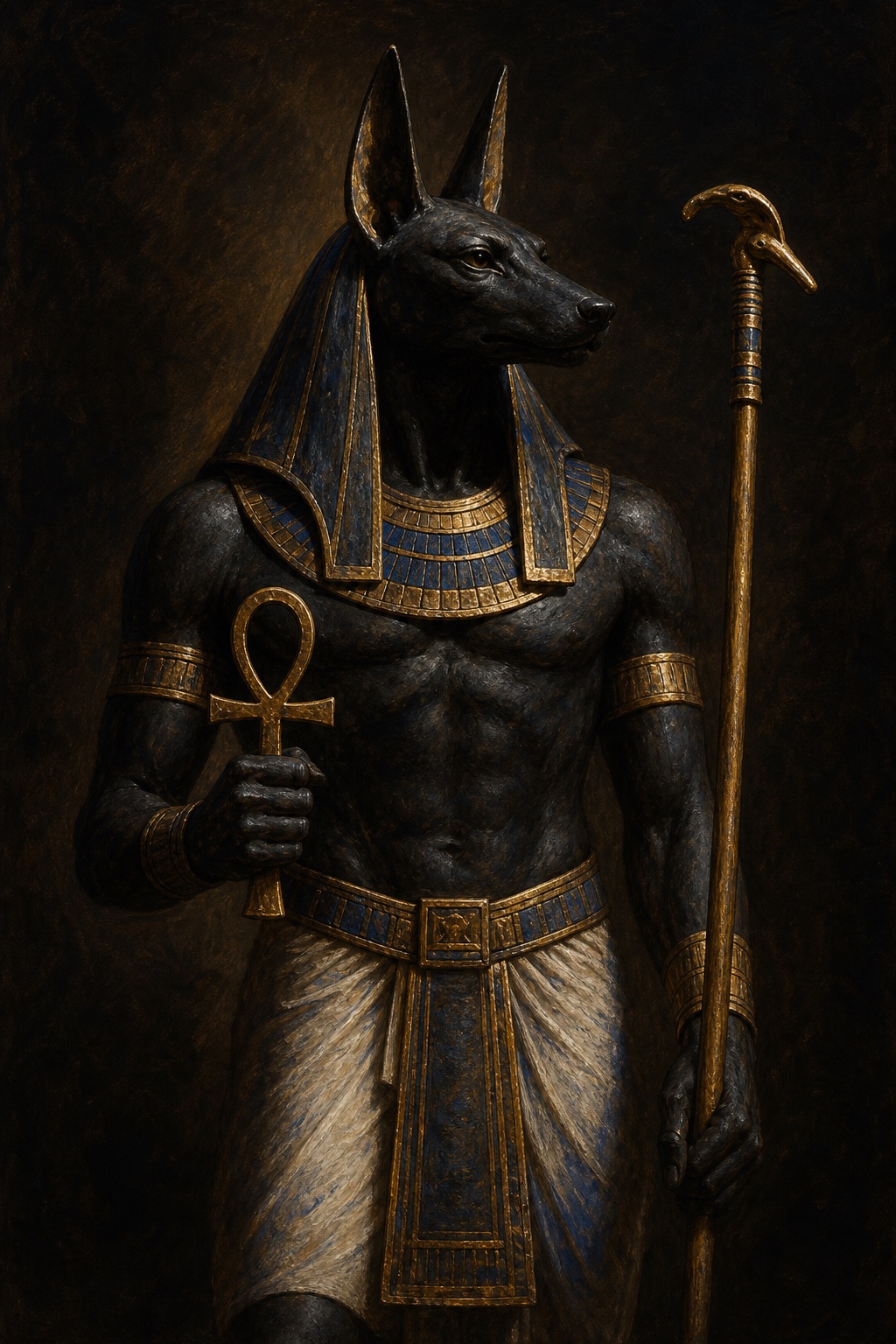
Anubis presides over embalming and stands guard at the threshold between life and death, his jackal head recalling the wild dogs that once scavenged desert gravesites — a danger the Egyptians answered by making that very animal’s form the dead’s protector instead. He is the oldest funerary god in the Egyptian pantheon, worshipped as lord of the necropolis long before Osiris absorbed much of his role as ruler of the dead; by the Middle Kingdom, Anubis has been recast as Osiris’s dutiful attendant rather than his rival. His parentage shifts with the source: some Old Kingdom texts make him a son of Ra, while the version popularized later, recorded by Plutarch, names Osiris and Nephthys as his father and mother.
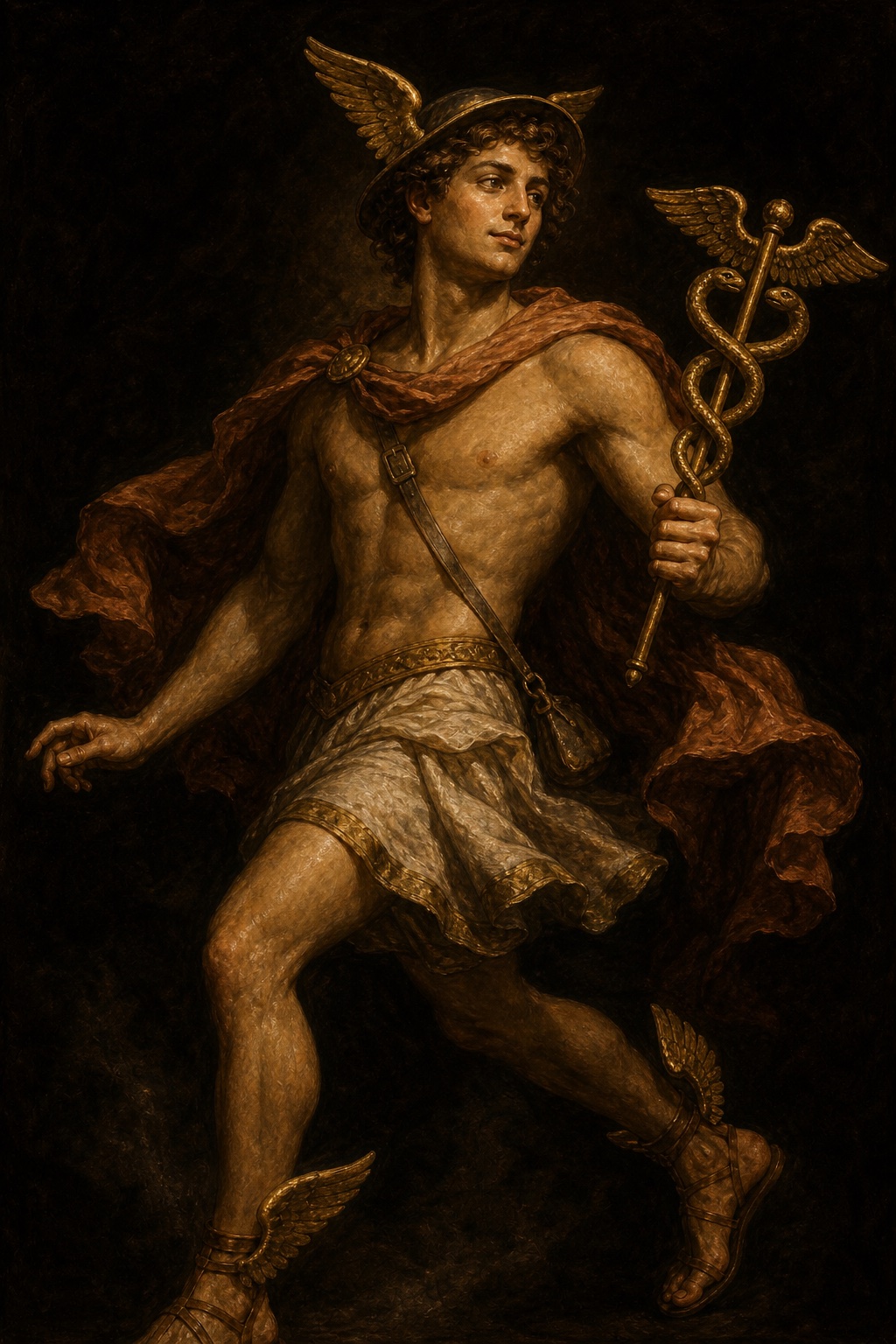
His central task is the weighing of the heart. In the Hall of Two Truths, Anubis places the deceased’s heart on one pan of the great scale and the feather of Maat on the other, and it is his careful hand, more than any single god’s judgment, that decides whether a soul passes into the Field of Reeds or is devoured by Ammit. He is also patron of embalmers, whose lead priest wore his mask during mummification rites. Greek visitors to Egypt later merged him with Hermes as “Hermanubis,” pairing his guardianship of the dead with Hermes’s own role as psychopomp.