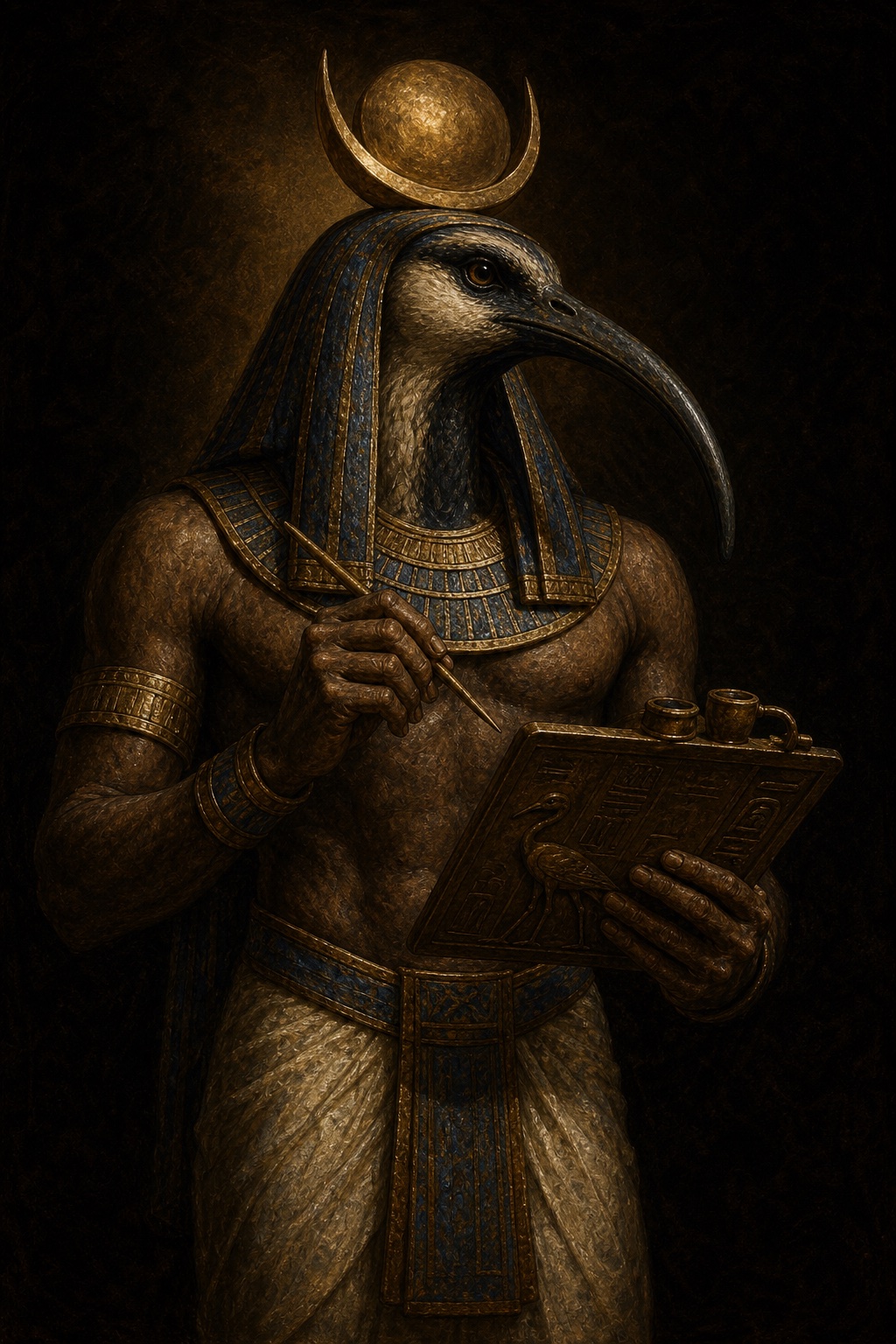
Thoth invents writing and holds the office of scribe to the gods, recording the words spoken at creation and keeping the archive of everything that has happened since. Depicted as an ibis-headed man or, at times, as a baboon, he measures time as a god of the moon, sets the calendar, and mediates disputes among the gods with an impartiality that makes him indispensable even after Ra withdraws from daily rule of the world. His own origins differ by cult center — Hermopolis, his primary seat, honored him as self-created at the dawn of time, while other traditions make him an agent or son of Ra.
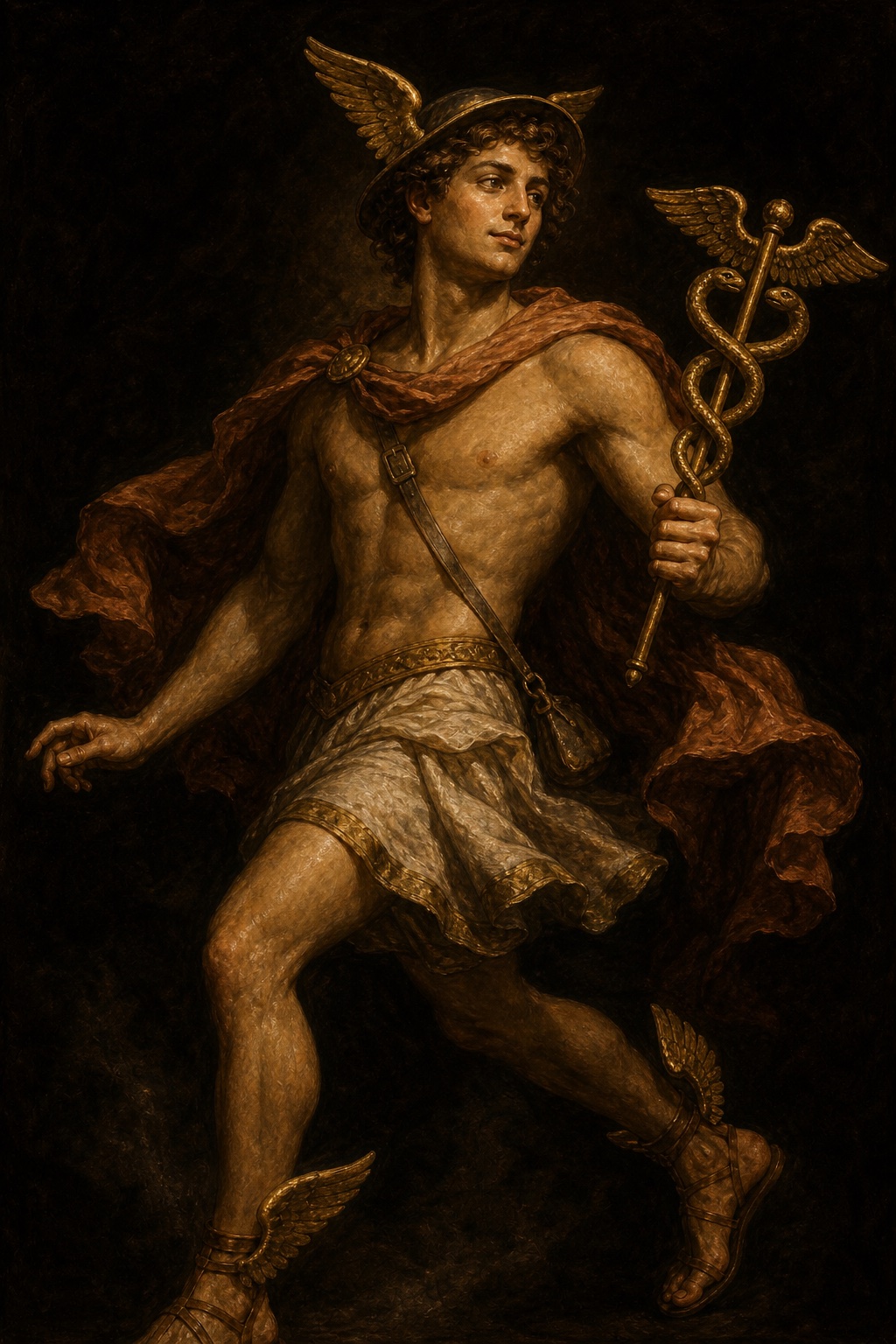
His most consequential role plays out in the Hall of Two Truths, where he stands beside the scale that weighs each heart against the feather of Maat and personally records the verdict. Egyptian magic is, by definition, his invention: spells work because he first spoke the words that shaped reality, and every magician who invokes him claims a share of that authority. Greek visitors later identified him with their own Hermes, and in the syncretic figure of Hermes Trismegistus — “thrice-great Hermes” — his reputation for hidden wisdom outlived Egyptian religion itself, feeding directly into the Hermetic texts of late antiquity.
“Hear ye this judgment. The heart of Osiris hath in very truth been weighed, and his soul hath stood as a witness for him; it hath been found true by trial in the Great Balance. There hath not been found any wickedness in him.” — The Book of the Dead: Theban Recension (1901), tr. E. A. Wallis Budge