The feather in the Balance
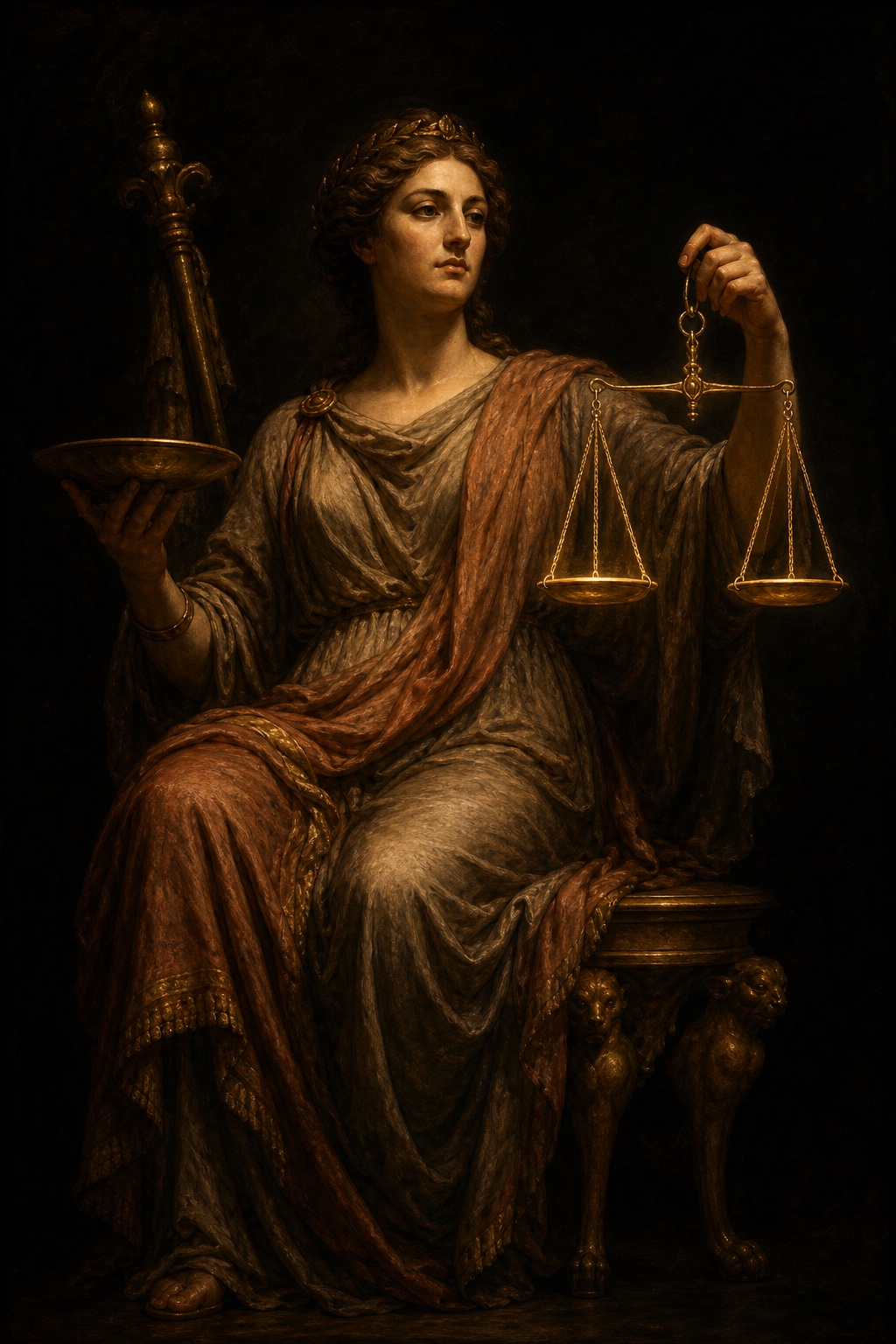
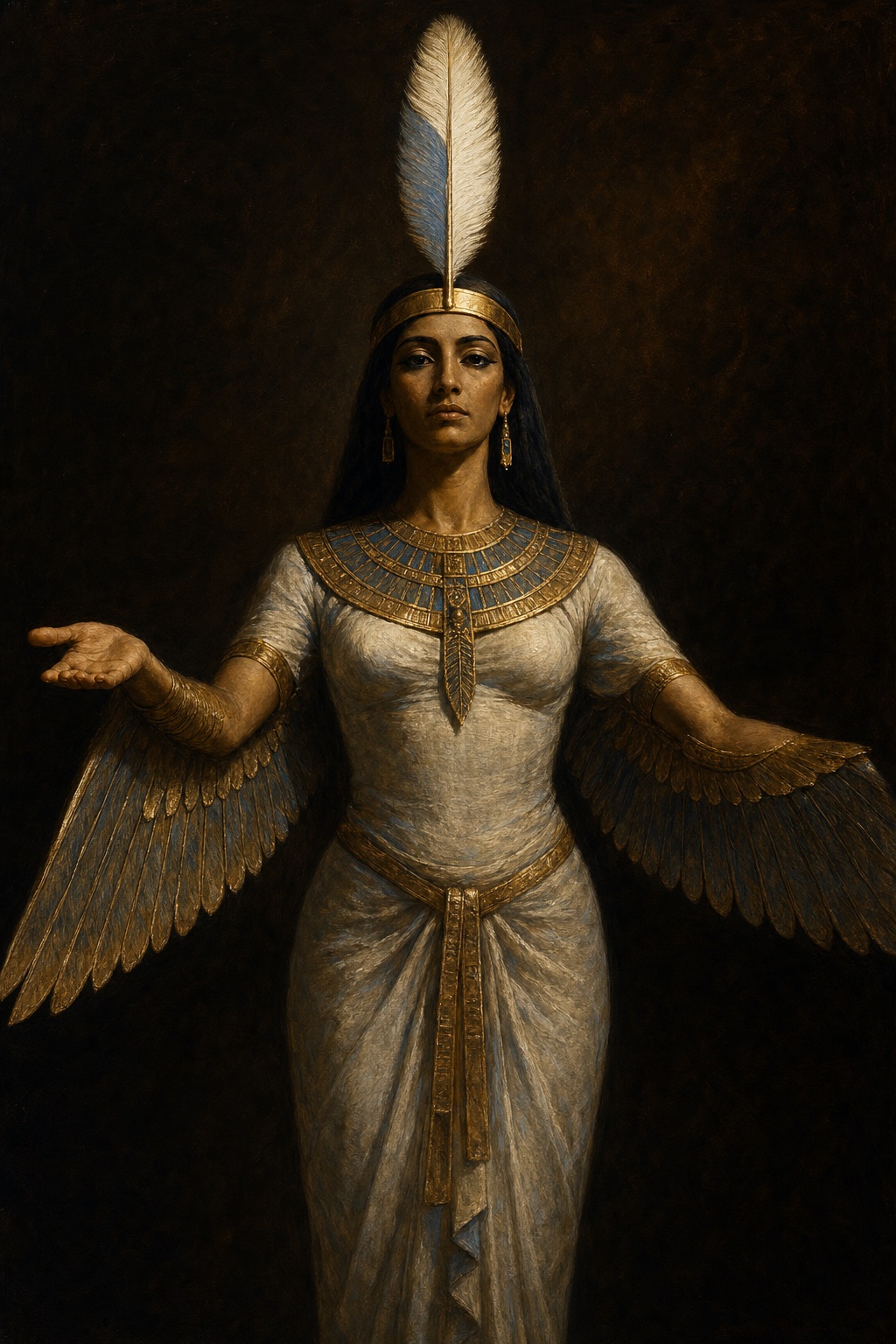
Budge’s retelling of the Papyrus of Ani vignette does not give Ma’at a body or a voice; she is a meaning attached to an object, and a name attached to a hall. In the scene itself, Ani’s heart sits in one pan of the scale, and the other holds the token the entire trial turns on:
Since the heart was considered to be the seat of all will, emotion, feeling, reason and intelligence, Ani’s heart, is seen in one pan of the Balance, and in the other is the feather, symbolic of truth and righteousness. — E. A. Wallis Budge, The Book of the Dead (Project Gutenberg EBook #7145), Chapter VII, “The Judgment of Osiris”
Budge never calls this object “the feather of Ma’at” in this chapter — that phrase, used elsewhere on this wiki for the same scene, is its own shorthand, not his wording. What he writes instead is plainer, and arguably says more: the feather simply is truth and righteousness, set against a life the way a trader sets a weight against grain. Ma’at does not stand outside the scale, judging it. She is what the scale measures.
Thoth’s verdict
Once the weighing is done, Thoth reads the result aloud to the assembled gods:
Then Thoth, the Judge of Truth, of the Great Company of the Gods who are in the presence of Osiris, saith to the gods, “Hearken ye to this word: In very truth the heart of Osiris hath been weighed, and his soul hath borne testimony concerning him; according to the Great Balance his case is truth (i.e., just). No wickedness hath been found in him. He did not filch offerings from the temples. He did not act crookedly, and he did not vilify folk when he was on earth.” — E. A. Wallis Budge, The Book of the Dead (Project Gutenberg EBook #7145), Chapter VII, “The Judgment of Osiris”
Thoth speaks “in the presence of Osiris” and then reports on “the heart of Osiris” — not the god twice over, but Ani himself, under the ritual identity every deceased Egyptian took on before this tribunal. “His case is truth” is not a plea granted; it is a plain report that a heart’s weight matched the feather’s. Egyptian tradition elsewhere pairs Thoth with Ma’at as consort, at their shared cult center of Hermopolis, though nothing in this verdict scene names that pairing outright — here the two simply share one balance, Thoth recording in words what Ma’at’s feather has already settled without him.
Bringing maat to the Lord of Maati
Later in the same chapter, the deceased addresses the standard directly, rather than waiting on a god to invoke it on his behalf. Ani approaches “the Lord of Maati” as a supplicant arriving prepared, naming what he brings, in a passage that also names Un-Nefer — one of Osiris’s own epithets — as the judge before whom the Forty-Two feed on the blood of sinners:
Homage to thee, O Great God, Lord of Maati, I have come to thee, O my Lord, that I may behold thy beneficence. I know thee, and I know thy name, and the names of the Forty-Two who live with thee in the Hall of Maati, who keep ward over sinners, and feed upon their blood on the day of estimating characters before Un-Nefer … Behold, I have come to thee, and I have brought maat (i.e., truth, integrity) to thee. — E. A. Wallis Budge, The Book of the Dead (Project Gutenberg EBook #7145), Chapter VII, “The Judgment of Osiris”
Here maat is lower-case and portable, a thing carried rather than a goddess invoked, while the hall itself carries her name twice over — Maati, the two truths, and Hall of Maati, home to the Forty-Two who judge alongside her. Egyptian tradition elsewhere makes Ma’at a daughter of Ra, extending the order the sun god first sets down through every generation that follows him; this confession does not reach that far back, but it shows plainly what the pharaoh and the humblest dead share under her standard. Everyone who enters the Hall of Maati has to bring the same thing.