Born of the sea-foam
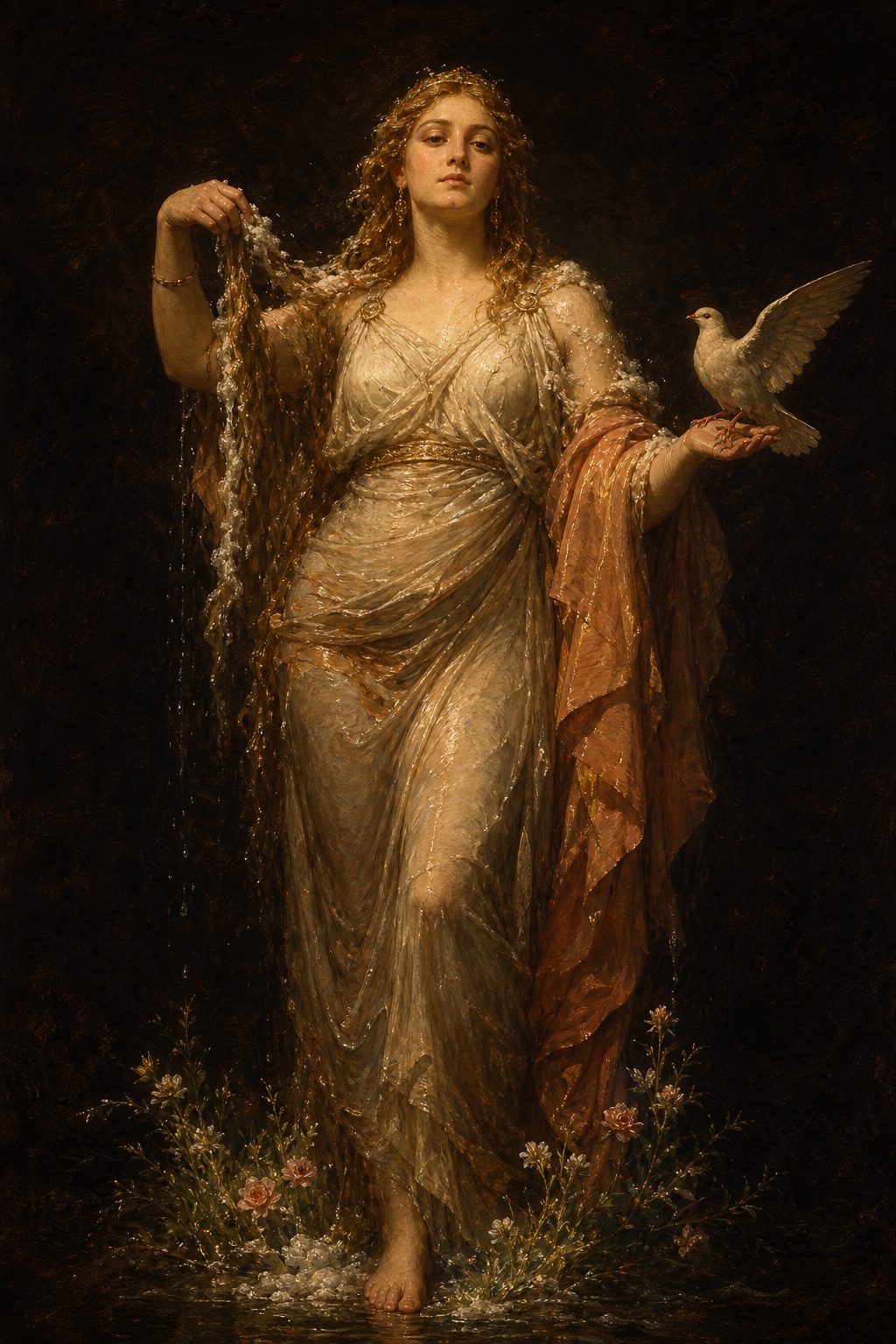
When Cronus cuts down his father Uranus and throws the severed members into the sea, Hesiod does not let the story end with the blood on the ground. The members drift for a long time, gathering a white foam from the immortal flesh, and inside that foam something forms.
ὡς τὸ πρῶτον ἀποτμήξας ἀδάμαντι κάββαλ᾽ ἀπ᾽ ἠπείροιο πολυκλύστῳ ἐνὶ πόντῳ, ὣς φέρετ᾽ ἂμ πέλαγος πουλὺν χρόνον, ἀμφὶ δὲ λευκὸς ἀφρὸς ἀπ᾽ ἀθανάτου χροὸς ὤρνυτο· τῷ δ᾽ ἔνι κούρη ἐθρέφθη· πρῶτον δὲ Κυθήροισιν ζαθέοισιν ἔπλητ᾽, ἔνθεν ἔπειτα περίῤῥυτον ἵκετο Κύπρον. ἐκ δ᾽ ἔβη αἰδοίη καλὴ θεός, ἀμφὶ δὲ ποίη ποσσὶν ὕπο ῥαδινοῖσιν ἀέξετο· τὴν δ᾽ Ἀφροδίτην [ἀφρογενέα τε θεὰν καὶ ἐυστέφανον Κυθέρειαν] κικλῄσκουσι θεοί τε καὶ ἀνέρες, οὕνεκ᾽ ἐν ἀφρῷ θρέφθη· ἀτὰρ Κυθέρειαν, ὅτι προσέκυρσε Κυθήροις· [Κυπρογενέα δ᾽, ὅτι γέντο πολυκλύστῳ ἐνὶ Κύπρῳ
“he had cut off the members with flint and cast them from the land into the surging sea, they were swept away over the main a long time: and a white foam spread around them from the immortal flesh, and in it there grew a maiden. First she drew near holy Cythera, and from there, afterwards, she came to sea-girt Cyprus, and came forth an awful and lovely goddess, and grass grew up about her beneath her shapely feet. Her gods and men call Aphrodite, and the foam-born goddess and rich-crowned Cytherea, because she grew amid the foam, and Cytherea because she reached Cythera, and Cyprogenes because she was born in billowy Cyprus” — Theogony 188–199, tr. Evelyn-White
Every name she carries out of this passage is Hesiod glossing his own etymology in real time — foam-born because she grew amid the foam, Cytherea for the island she first touches, Cyprogenes for the one she comes ashore on. Even the grass under her feet is doing quiet work: a goddess visibly makes things grow the moment she arrives, before she has a temple, a cult, or a single worshipper.
That is the whole of her origin. She has no mother, no father, no childhood — she goes directly from a piece of a mutilated god to a full-grown goddess walking onto a beach. It is the least ordinary birth in the Theogony, and it leaves her, structurally, an orphan.
A parentage in dispute
Being fatherless in Hesiod did not stop Homer from giving her a family anyway. The Iliad tells a domestic, unremarkable version of her birth that has nothing to do with severed gods or sea-foam at all.
The two accounts do not really compete so much as talk past each other. Hesiod is explaining where the category of love and desire comes from — cosmology needs an origin for it as much as it needs one for night or memory. Homer just needs a wounded goddess to have somewhere to cry, and every other god on Olympus has a mother to run to.
Cult, girdle and kindred goddesses
Aphrodite governs love and fertility, and both are the same power in two registers: what draws two people together, and what a marriage is then supposed to produce. Her cult objects say as much without needing a line of verse to gloss them — the dove and the myrtle are standing emblems of desire in Greek religion, and the magic girdle is a piece of equipment, not a fashion accessory. Even Hera borrows it once, when she needs to seduce Zeus and put him to sleep, because Aphrodite’s own power is the one thing in the pantheon strong enough to distract the king of the gods.
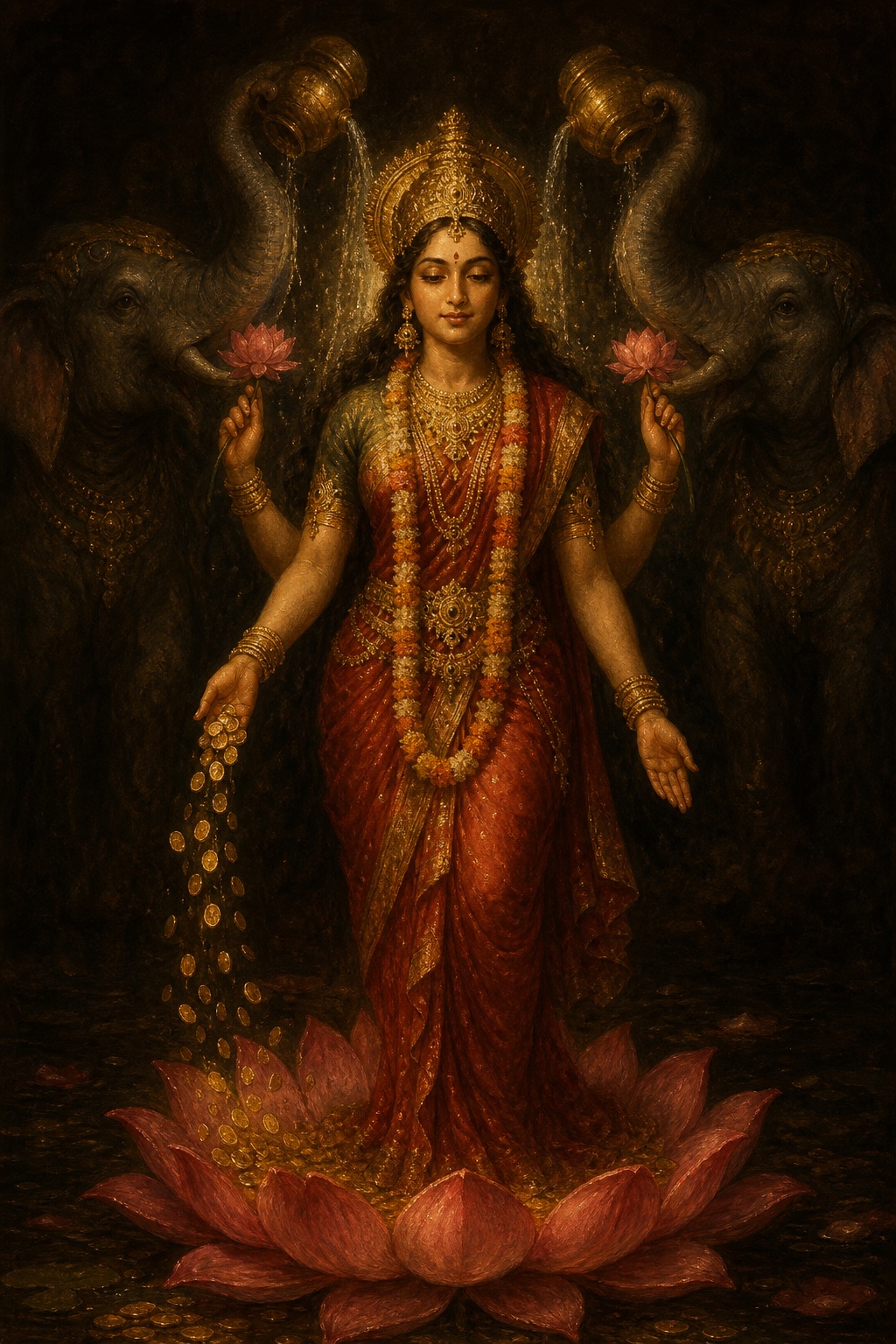
Every pantheon eventually needs a goddess for exactly this job, and the family resemblance across cultures is unusually tight. Norse myth’s Freyja governs love and fertility on the same terms and rides to battle besides, which Aphrodite in Greek tradition famously does not. Hindu myth’s Lakshmi rises out of a churned ocean rather than a cast-off god, but the shape of the story — a goddess of beauty surfacing from water, fully formed, before land or worshippers exist — is close enough that the two origin myths could almost be describing the same event from different shores.