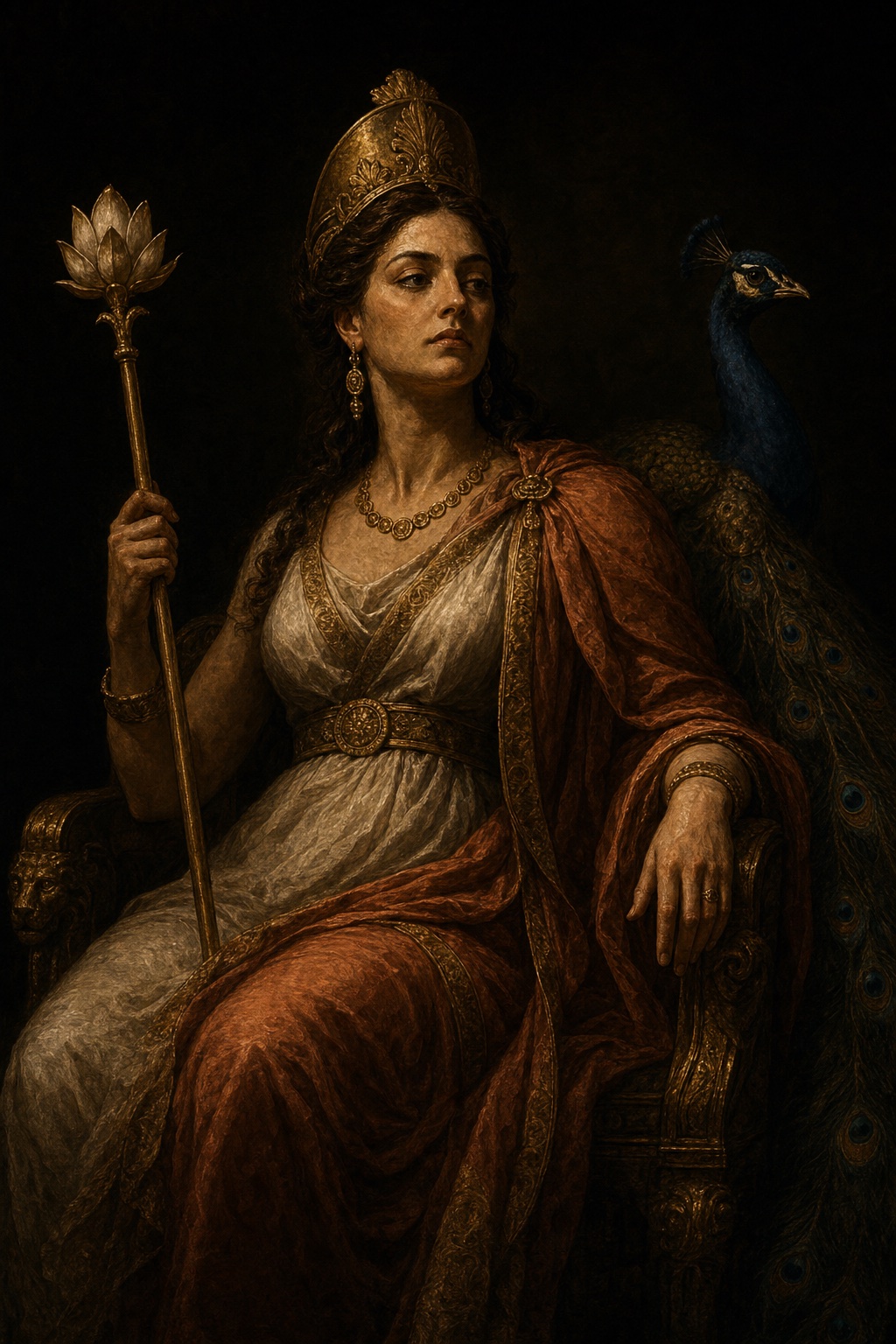
Hera is the wife and sister of Zeus, and the shortest of the Homeric Hymns states her position without qualification.
Ἥρην ἀείδω χρυσόθρονον ἣν τέκε Ῥείη, ἀθανάτων βασίλειαν ὑπείροχον εἶδος ἔχουσαν Ζηνὸς ἐριγδούποιο κασιγνήτην ἄλοχόν τε κυδρήν, ἣν πάντες μάκαρες κατὰ μακρὸν Ὄλυμπον ἁζόμενοι τίουσιν ὁμῶς Διὶ τερπικεραύνῳ
“I sing of golden-throned Hera whom Rhea bare. Queen of the immortals is she, surpassing all in beauty: she is the sister and the wife of loud-thundering Zeus — the glorious one whom all the blessed throughout high Olympus reverence and honour even as Zeus who delights in thunder.” — Homeric Hymn 12, To Hera, tr. Evelyn-White
Even as Zeus. That is the claim the rest of her mythology keeps testing. Homer’s Hera is not a decorative consort but a political rival inside her own house: she argues with Zeus in open assembly, she is threatened with violence and does not stop, and in the Iliad she borrows Aphrodite’s girdle, seduces her husband on Mount Ida and puts him to sleep purely to get him off the battlefield for an afternoon so the Greeks can advance. It works.
Her anger is famous and it is almost always aimed sideways. Zeus’s infidelities are constant and she rarely punishes Zeus; she punishes the women and the children. Leto is hounded across the earth and refused a birthplace until barren Delos takes her in. Heracles — whose name means “glory of Hera” — is given serpents in his cradle, a lifetime of labours and a fit of madness. Io is turned into a heifer and set under a hundred-eyed guard. Read uncharitably this is spite. Read as the Greeks framed it, it is the goddess of marriage prosecuting offences against marriage, using the only defendants she can reach.
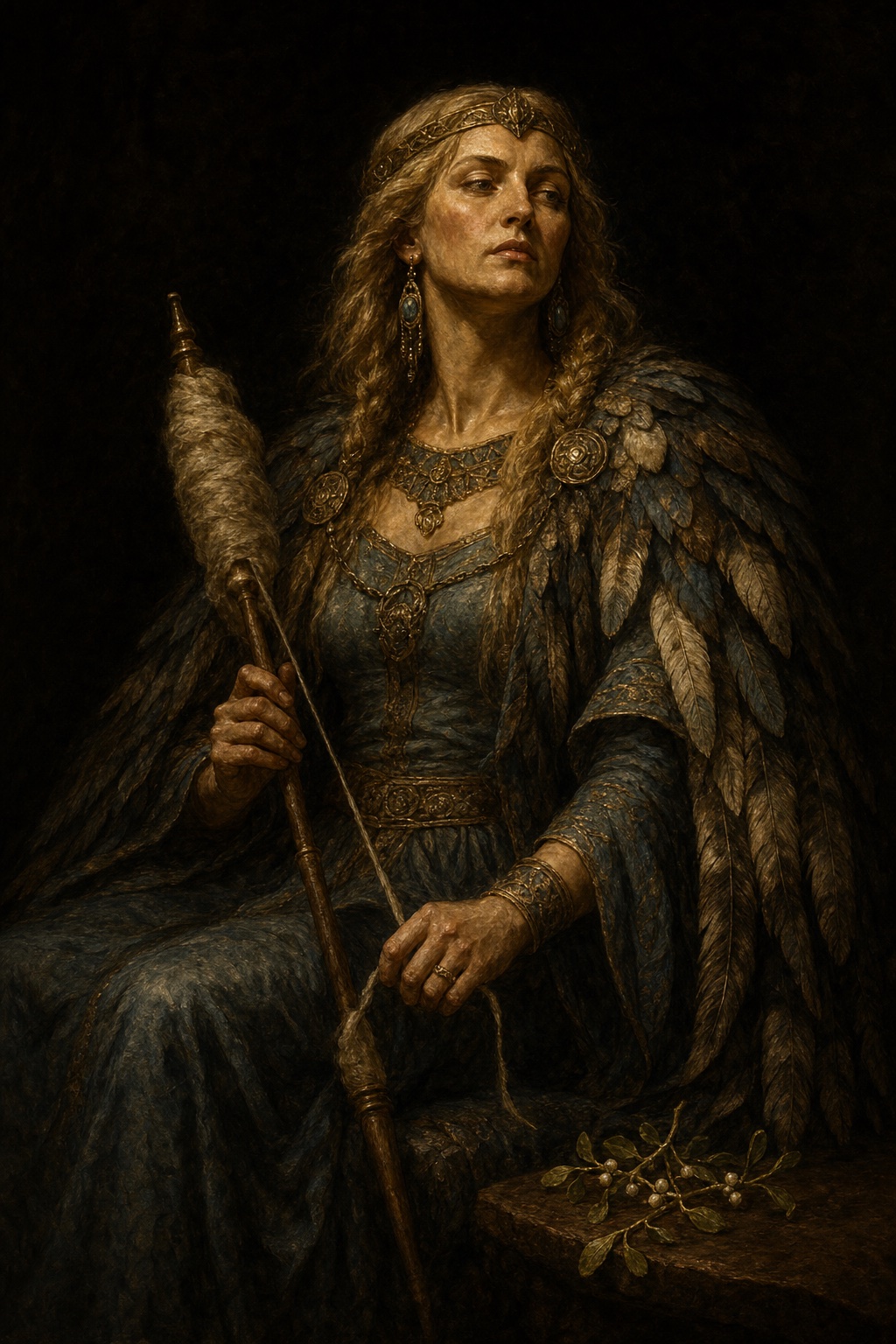
Her cult tells a quieter story than the poems. At Argos and on Samos she was among the greatest of the gods, with temples older and larger than most of Zeus’s, worshipped as Parthenos, Teleia and Chēra — maiden, fulfilled, and separated — a goddess who passed through the whole cycle of a woman’s status rather than sitting fixed at one point of it. The Samians told of an annual rite in which her image was carried to the shore and washed, and the marriage renewed. The Norse arrangement is close enough to be worth noting: Frigg, wife of the chief god, sits with him and knows all fates, and says nothing.