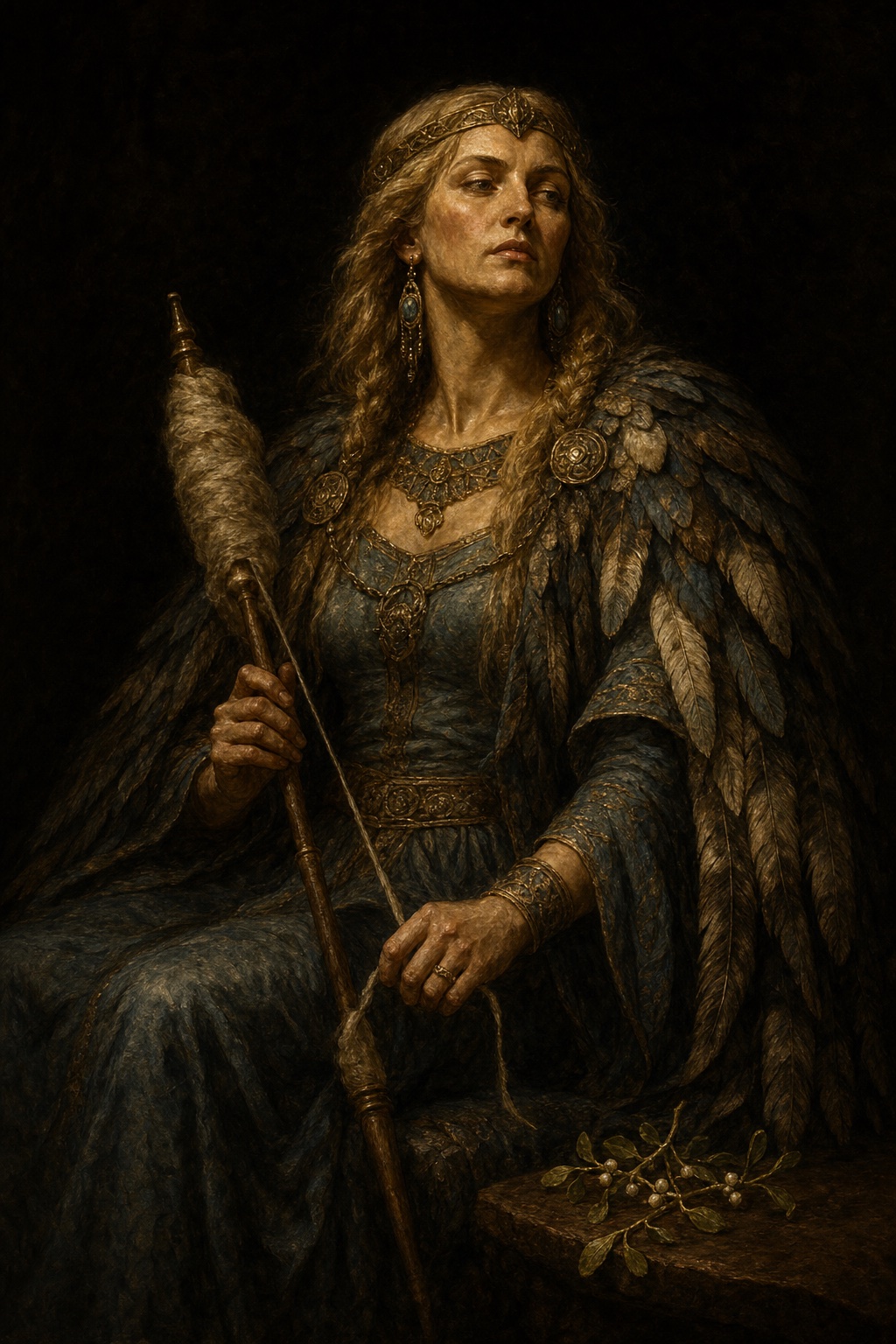
Frigg is Odin’s wife and the foremost of the goddesses, and her defining attribute is a kind of silence. In the flyting at Ægir’s hall, when Loki is working his way around the room, it is Freyja who says what everyone knows about her.
Ærr ertu, Loki, er þú yðra telr ljóta leiðstafi; örlög Frigg, hygg ek, at öll viti, þótt hon sjalfgi segi
“Mad art thou, Loki, that known thou makest The wrong and shame thou hast wrought; The fate of all does Frigg know well, Though herself she says it not.” — Lokasenna 29, tr. Bellows
She has Odin’s knowledge without Odin’s compulsion to act on it. He hangs himself on the tree, gives an eye, wanders the world under false names and interrogates the dead to learn what is coming; she simply knows, and keeps it. The one time the poems show her using foreknowledge, it is not to prepare or to warn but to try to prevent — and the attempt is the most famous failure in Norse myth.
When Baldr’s dreams turn ominous, Frigg goes out and takes an oath from everything that could hurt him: fire and water, iron and every metal, stones, earth, trees, sicknesses, beasts, birds, venoms, serpents. The world agrees. What she skips is a shoot of mistletoe growing west of Valhalla, which she judges too young to bother swearing — and then she tells this to a stranger who has come to sit with her and make conversation. The stranger is Loki. Her care is what builds the weapon, and her one act of candour is what aims it.
Afterwards she is the one who sends Hermóðr down the long road to Hel to ransom her son, and she gets a conditional yes: Baldr may return if every thing in the world weeps for him. Everything does, except one giantess in a cave who will not, and Baldr stays where he is. Twice, then, Frigg has the whole world in agreement and is undone by the single exception. In Völuspá she is left weeping in Fensalir, her marsh-hall, and the poem counts her sorrow among the wounds that lead to the end of everything.
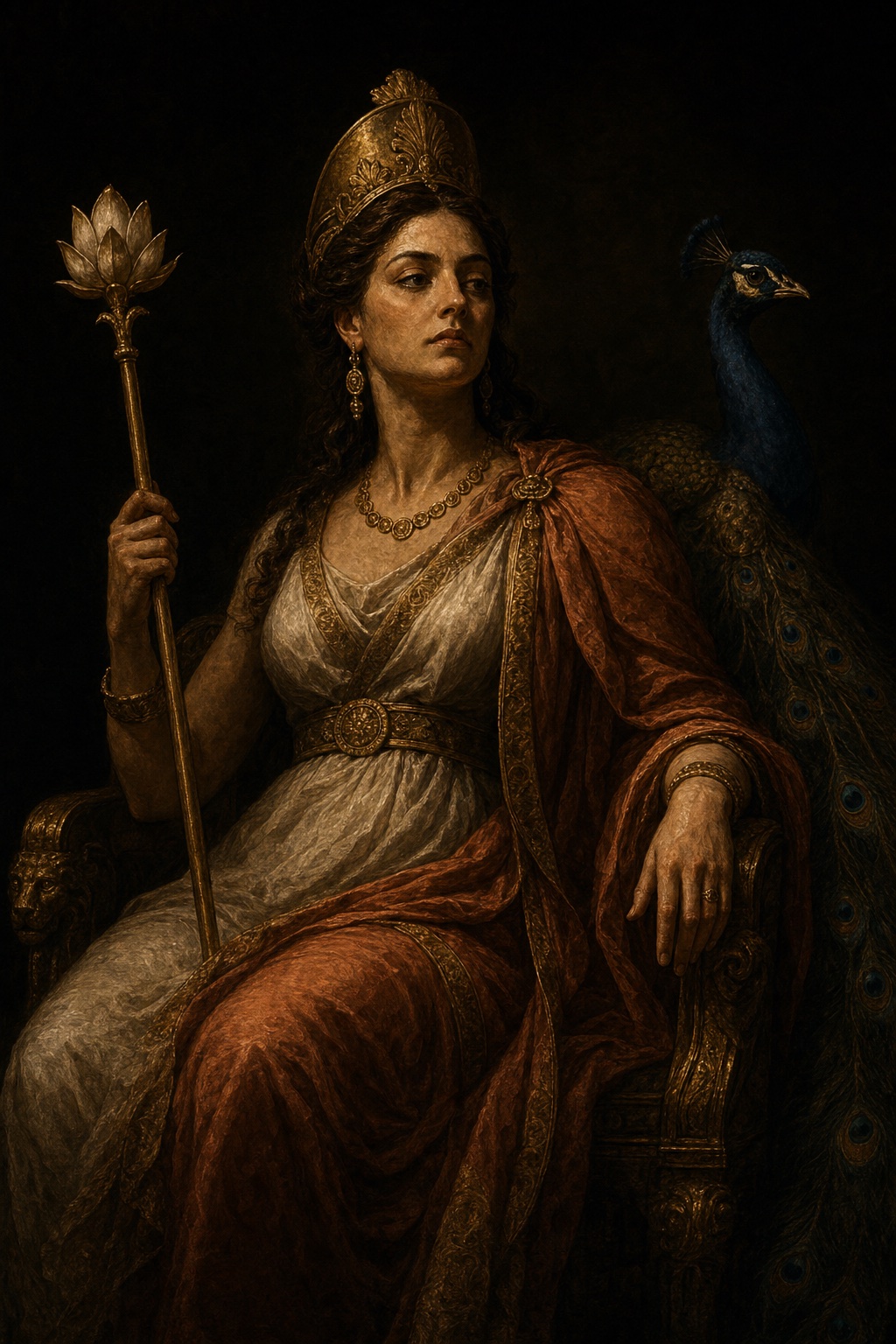
She is easily confused with Freyja — both are great goddesses, both associated with love and with falcon-shapes, both have husbands who vanish and are wept for — and scholars have long argued whether they were once one figure. Snorri keeps them firmly apart. The likeness to Hera is closer than the likeness to Freyja: the wife of the sky-father, first among goddesses, seated beside him and, in Frigg’s case, saying nothing at all.