Most hateful of the gods
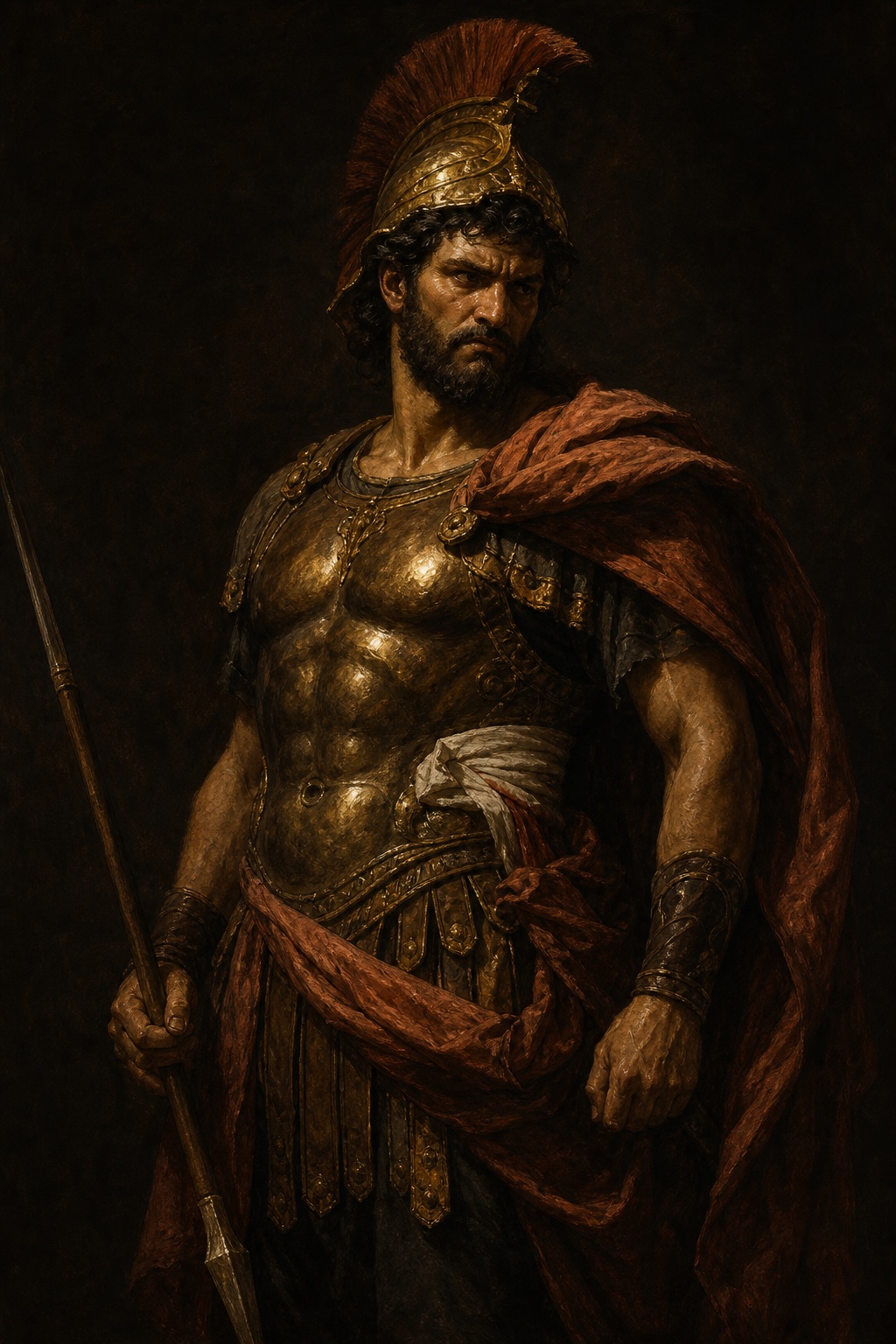
Ares is the god of war, but only one version of it. Athena’s war is strategy and the defense of cities; Ares’ is noise, killing, and chaos, wanted for their own sake and not for anything they win. Nobody states the difference more bluntly than his own father, and not as commentary — to his face, in the middle of a war.
In the fifth book of the Iliad, the mortal Diomedes drives a bronze spear into Ares’ belly, Athena’s own hand guiding the shaft as it goes in. Ares bellows, flees up through the clouds to Olympus, and sits down beside Zeus to show off the wound and ask for sympathy. What he gets instead is a verdict.
ὑπόδρα ἰδὼν προσέφη νεφεληγερέτα Ζεύς. «μή τί μοι ἀλλοπρόσαλλε παρεζόμενος μινύριζε. ἔχθιστος δέ μοί ἐσσι θεῶν οἳ Ὄλυμπον ἔχουσιν· αἰεὶ γάρ τοι ἔρις τε φίλη πόλεμοί τε μάχαι τε. μητρός τοι μένος ἐστὶν ἀάσχετον οὐκ ἐπιεικτὸν Ἥρης· τὴν μὲν ἐγὼ σπουδῇ δάμνημ’ ἐπέεσσι· τώ σ’ ὀΐω κείνης τάδε πάσχειν ἐννεσίῃσιν. ἀλλ’ οὐ μάν σ’ ἔτι δηρὸν ἀνέξομαι ἄλγε’ ἔχοντα· ἐκ γὰρ ἐμεῦ γένος ἐσσί, ἐμοὶ δέ σε γείνατο μήτηρ· εἰ δέ τευ ἐξ ἄλλου γε θεῶν γένευ ὧδ’ ἀΐδηλος, καί κεν δὴ πάλαι ἦσθα ἐνέρτερος Οὐρανιώνων
“Then with an angry glance from beneath his brows spake to him Zeus, the cloud-gatherer: ‘Sit thou not in any wise by me and whine, thou renegade. Most hateful to me art thou of all gods that hold Olympus, for ever is strife dear to thee and wars and fightings. Thou hast the unbearable, unyielding spirit of thy mother, even of Hera; her can I scarce control by my words. Wherefore it is by her promptings, meseems, that thou sufferest thus. Howbeit I will no longer endure that thou shouldest be in pain, for thou art mine offspring, and it was to me that thy mother bare thee; but wert thou born of any other god, thus pestilent as thou art, then long ere this hadst thou been lower than the sons of heaven.’” — Homer, Iliad 5.888–898, tr. A. T. Murray
Zeus’s diagnosis costs Ares nothing less than his dignity. Strife itself — not victory, not glory — is what his son loves, and the only thing keeping him welcome on Olympus at all is that he is Zeus’s own blood. It is the harshest character reference any god in the poem gives another, delivered by a father to a son freshly run through with a spear, and nothing else in the surviving myth contradicts it.
Brazen, and welcome nowhere
Even the ally who wounds him cannot stand him. Moments after guiding Diomedes’ spear into his body, Athena takes Ares by the hand, marches him off the field, and tells him, in the poem’s own words, “Ares, Ares, thou bane of mortals, thou blood-stained stormer of walls.” It is not an enemy talking. It is the goddess on his own side, at the end of her patience.
The rest of the book agrees with her. Homer calls him brazen, again and again, in the same episode, as though his temper were a property of the metal he wears rather than a personality underneath it, and has him bellow, when the spear goes in, as loud as nine thousand men crying out in a single battle. He is not so much fought as endured — a force the poem measures in noise and casualties rather than intentions.
Lover of Aphrodite, father of Panic and Fear
Ares’ family life runs almost entirely through Aphrodite, and it complicates the war-god reputation rather than confirming it. Hesiod’s Theogony names their children as Deimos and Phobos, Panic and Fear, who ride at their father’s side into battle, and Harmonia, whom the Theban king Cadmus marries — concord, oddly, is the child of the god who loves war for its own sake.
The affair is also the subject of Greek myth’s best-known joke at a god’s expense. In the Odyssey, the bard Demodocus sings of how Hephaestus — Aphrodite’s husband, and Ares’ own brother through Hera — traps the two lovers in an unbreakable net of his own forging and puts them on display, to the helpless laughter of the assembled gods. For one scene, the terror of the battlefield becomes entertainment for the entire pantheon; only Poseidon’s intervention gets him let go.
Golden-helmed, and praying for peace
By the time a hymn was written in his honor — centuries after Homer, in a much later and more formulaic style — it shows Ares doing nothing at all. It greets him instead with a solid wall of martial epithets: “golden-helmed,” “shield-bearer,” “mighty with the spear.” He is addressed the way a weapon is addressed, praised for what he is capable of rather than for anything he has chosen to do with it.
Then, unexpectedly, the hymn asks him for the opposite of what he is famous for.
ἀλλὰ σὺ θάρσος δός, μάκαρ, εἰρήνης τε μένειν ἐν ἀπήμοσι θεσμοῖς δυσμενέων προφυγόντα μόθον κῆράς τε βιαίους
“Rather, O blessed one, give you me boldness to abide within the harmless laws of peace, avoiding strife and hatred and the violent fiends of death.” — Homeric Hymn 8, To Ares 15–17, tr. Hugh G. Evelyn-White
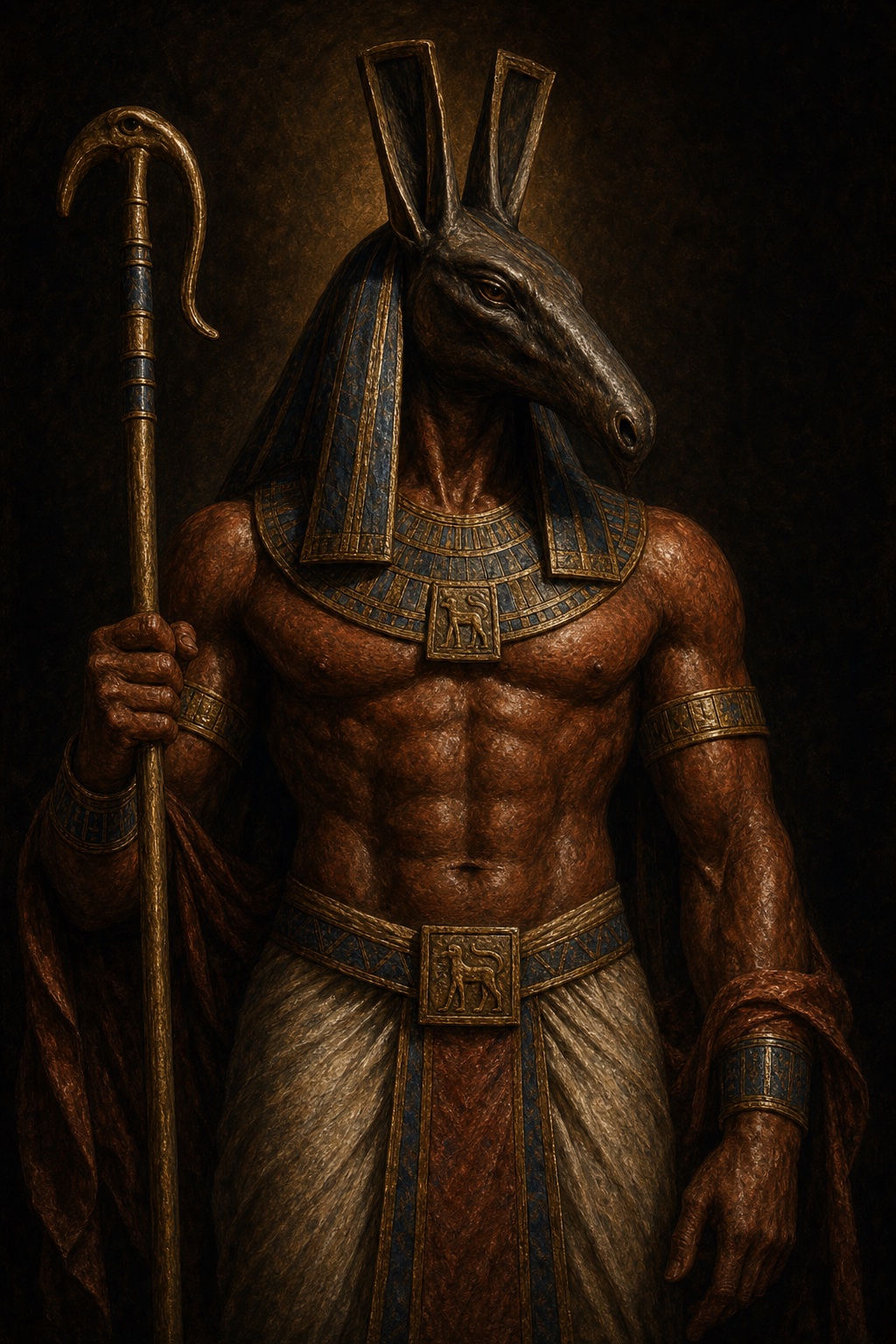
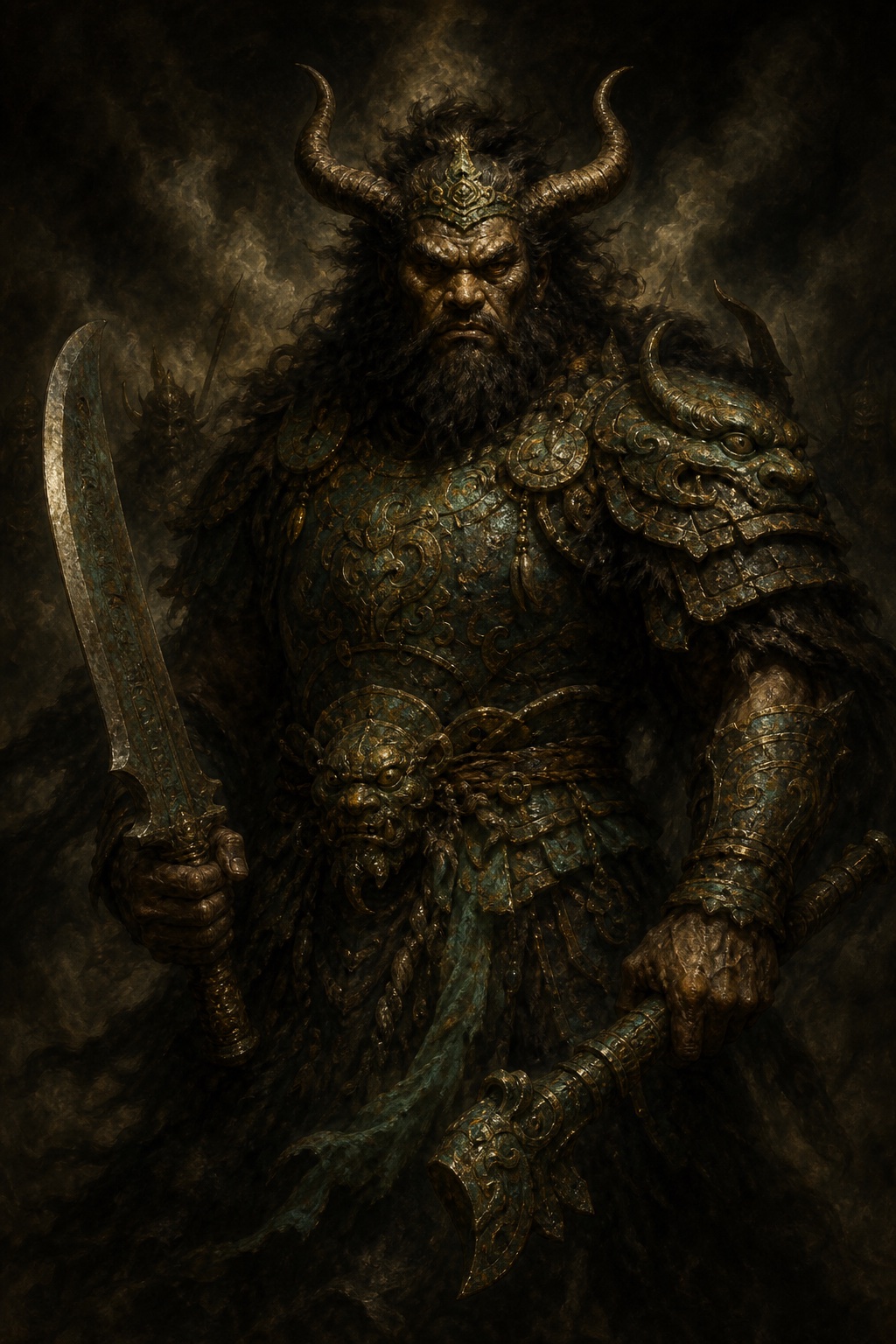
Even his own worship, in other words, wants less of him than he is. The same instinct recurs elsewhere: Egypt’s Set, defaced and driven out for his violence yet still trusted with the spear at the prow of Ra’s barque each night, and China’s Chiyou, remembered less as a person than as the origin point of disorder itself. Ares is what Greek religion did with that same figure — never banished from Olympus, only despised on it, and kept in the family because the blood running in him is his father’s own.