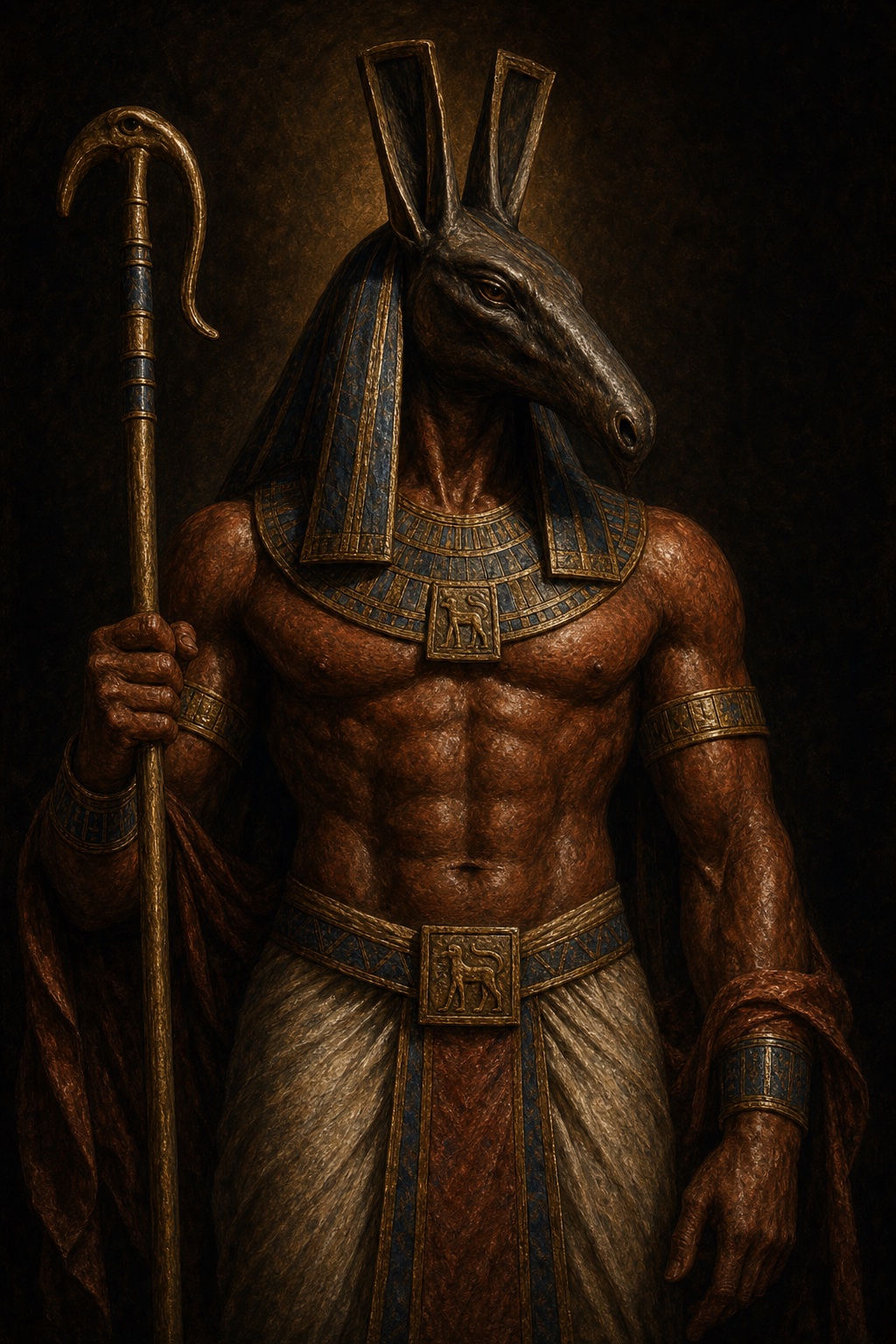
Set is the desert, the storm, and the disruption that both threatens order and, paradoxically, sustains it. Jealous of his brother Osiris’s rule, he tricks him into a coffin built to his exact measurements, seals him inside, and — in the fuller version of the story preserved by Plutarch — later cuts the body apart and scatters the pieces across Egypt to prevent his return. That single act makes him mythology’s clearest villain, the murderer whose nephew Horus spends a lifetime avenging.
Yet Set’s reputation shifts sharply across Egyptian history, and flattening him into a simple devil misreads most of it. In the Old and Middle Kingdoms he stands beside Horus as a legitimate claimant to kingship and a protector of Ra himself: every night, spear in hand, he stands at the prow of the sun god’s barque and drives off the chaos-serpent Apep, the one power in the pantheon strong enough for the task. Only from the later New Kingdom on — as Egypt suffered invasions from the east that Set’s foreign, desert-dwelling character came to symbolize — does he harden into an outright enemy of the gods, his images defaced and his name struck from monuments. He is less a god of evil than a god of necessary violence, whose moral standing depends heavily on which century’s Egypt is telling his story.