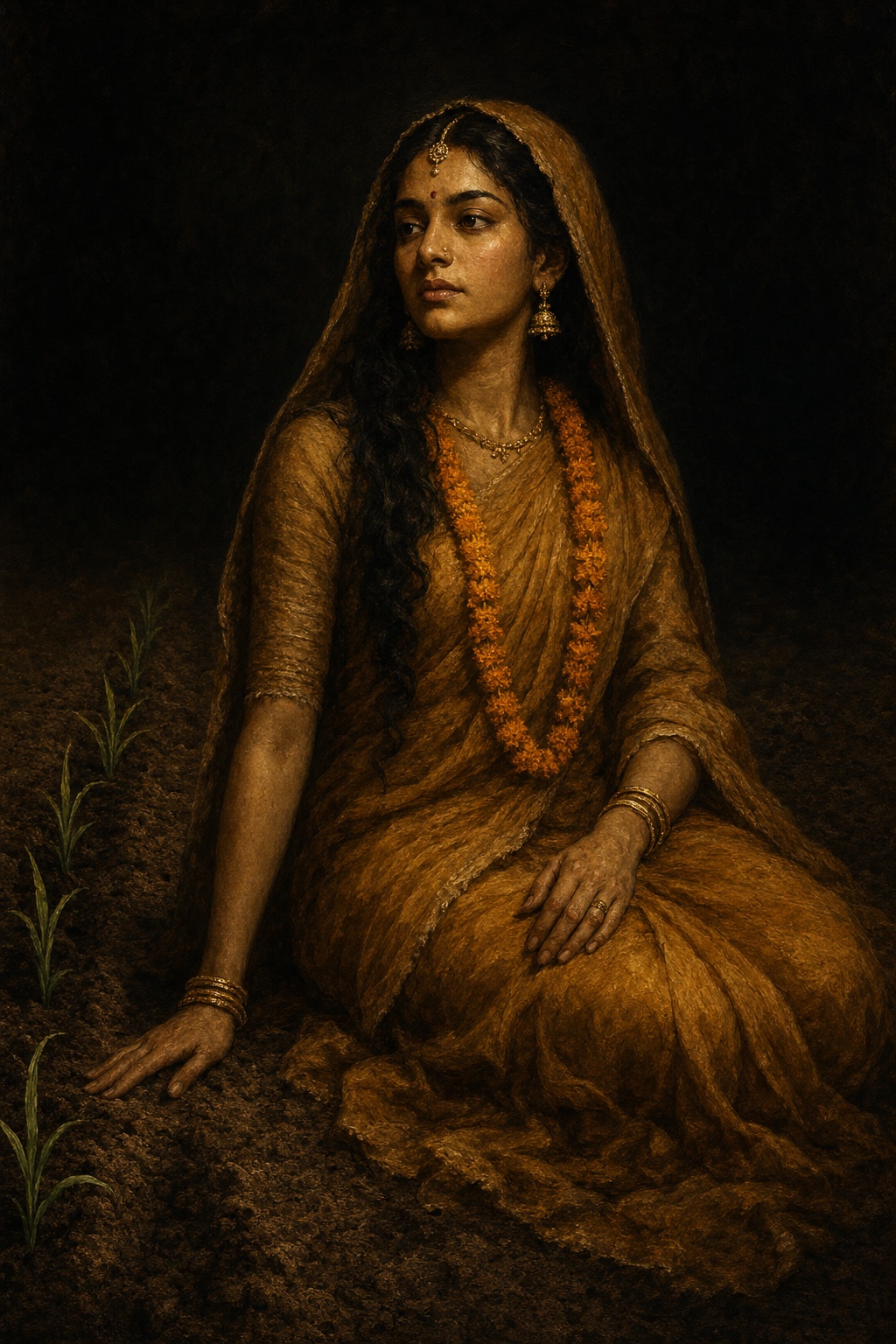
Sita has no birth, only a discovery. King Janaka of Mithila is ploughing a field as part of a rite when the share turns up a child, and he takes her as his daughter. Her name is the word for the furrow itself.
अथ मे कृषतः क्षेत्रं लांगलादुत्थिता ततः ॥१३॥ क्षेत्रं शोधयता लब्धा नाम्ना सीतेति विश्रुता
“Once, as it chanced, I ploughed the ground, When sudden, ‘neath the share was found An infant springing from the earth, Named Sitá from her secret birth.” — Ramayana 1.66.13–14, tr. Griffith
Because she is not of mortal birth, Janaka sets a price no ordinary suitor can pay: the bow of Shiva, which no one has been able to string. Rama breaks it, and marries her. She then chooses to follow him into fourteen years of forest exile rather than remain in comfort, which is the first of several times the poem shows her deciding her own case.
The abduction is engineered through her generosity. Ravana comes to the hermitage disguised as a wandering ascetic; Sita, bound by the obligation to feed a mendicant, receives him, and is taken. Held in the grove at Lanka for a year, she refuses Ravana absolutely — threatened, flattered and surrounded by demonesses, she will not look at him or speak to him directly, and tells Hanuman when he finds her that she will not be carried off even by a rescuer, because it is Rama’s business to come for her.
He does come, and wins, and then does the thing the poem never quite recovers from: he tells her she is free to go where she likes, since he fought for his honour rather than for her, and no man can take back a wife who has lived in another’s house. She asks for a fire to be built and walks into it, and Agni gives her back unburnt. Even that is not the end. Years later, with Sita pregnant, the gossip of Ayodhya reaches Rama again and he has her abandoned in the forest, where she raises their twin sons at Valmiki’s hermitage. When at last he sends for her and asks for one more public oath, she gives a different answer: she calls on her mother to receive her, the earth opens, a throne rises, and she is taken down and does not come back.
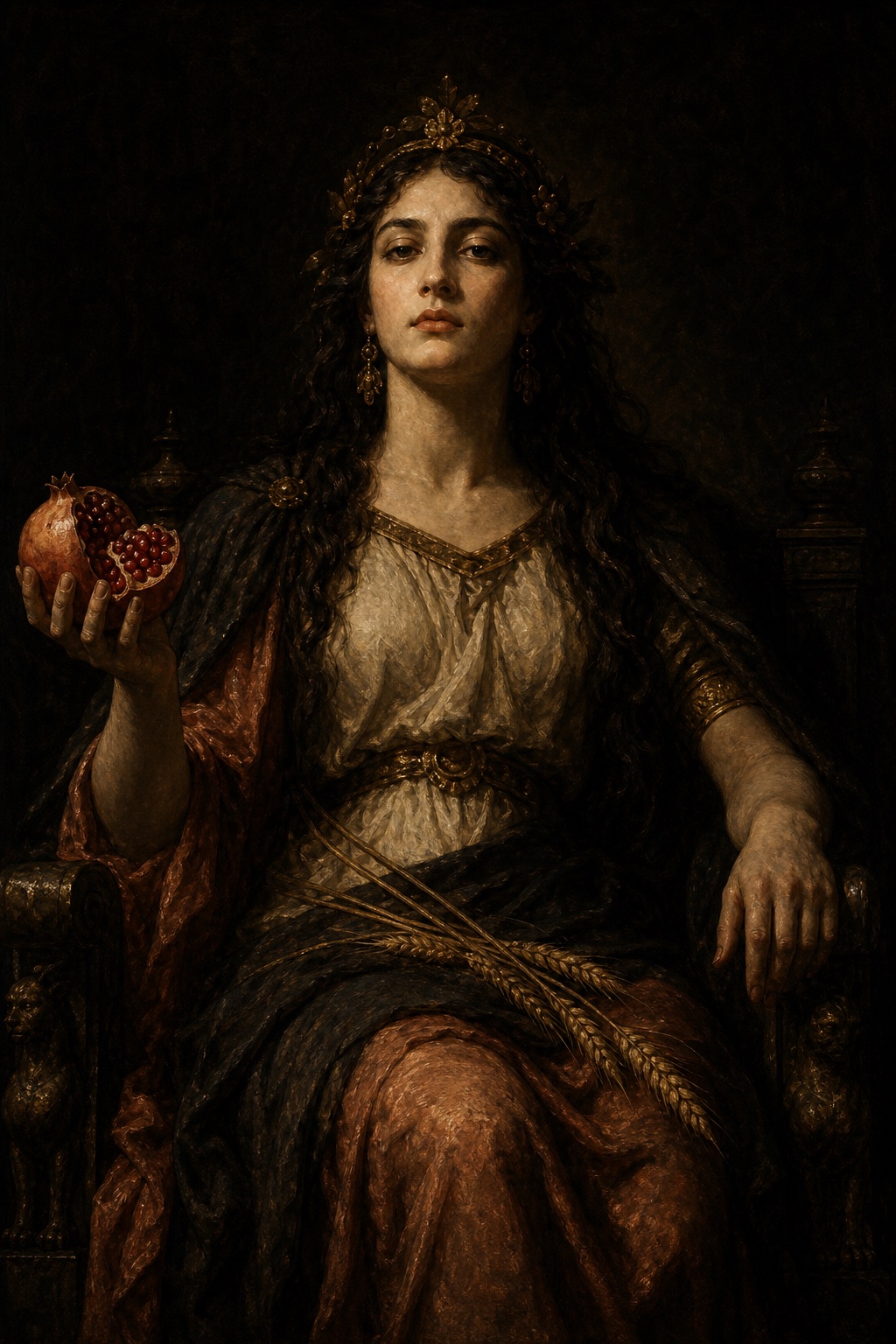
The Greek shape of this is Persephone — a girl bound to the ground, lost from the world above, and only partly recoverable — but the endings run opposite ways. Persephone is negotiated back for two-thirds of every year; Sita, having been vindicated twice over, declines to be recovered at all. Later tradition identifies her with Lakshmi, born on earth as Vishnu’s consort is born wherever he is, and reads her disappearance as a return rather than a death.